


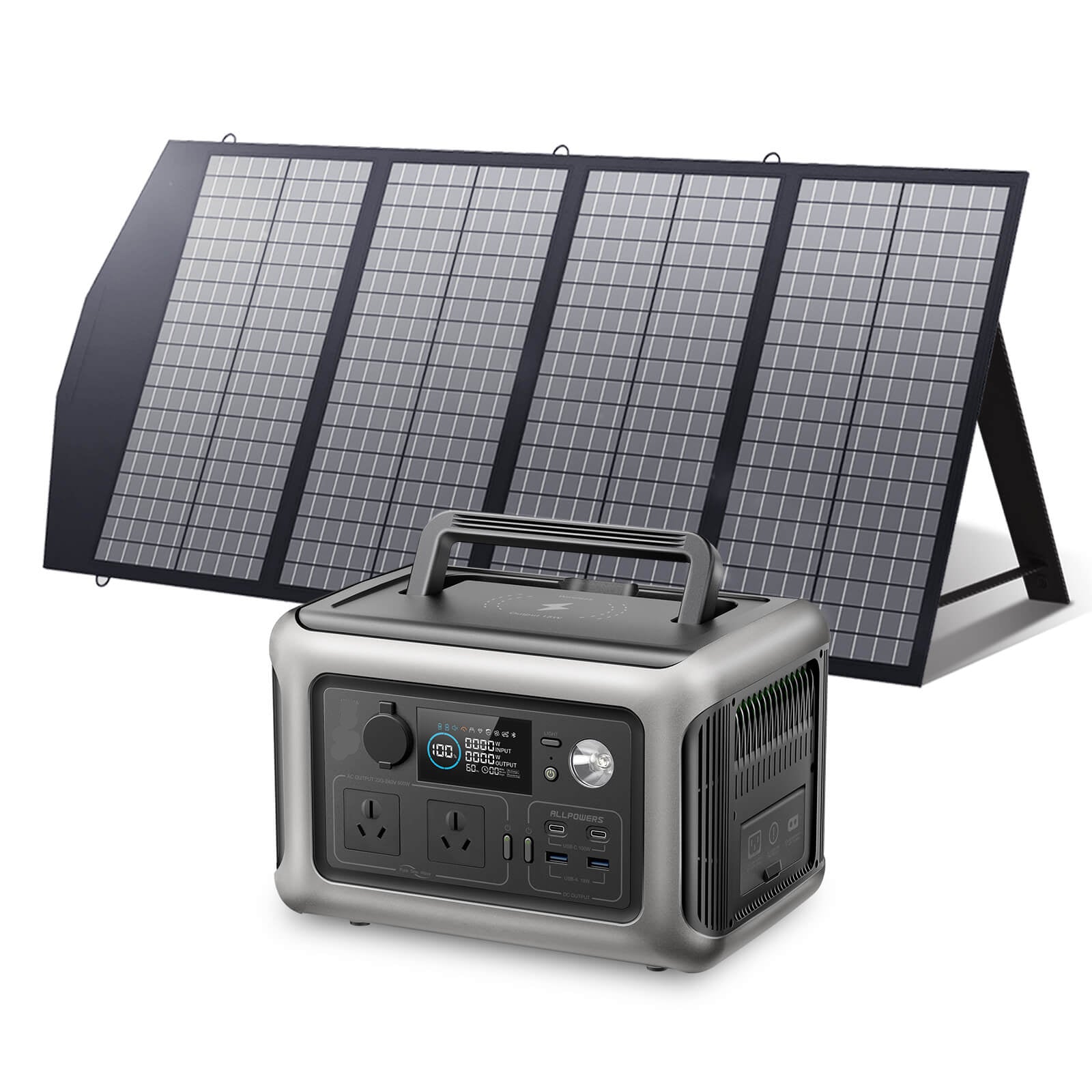


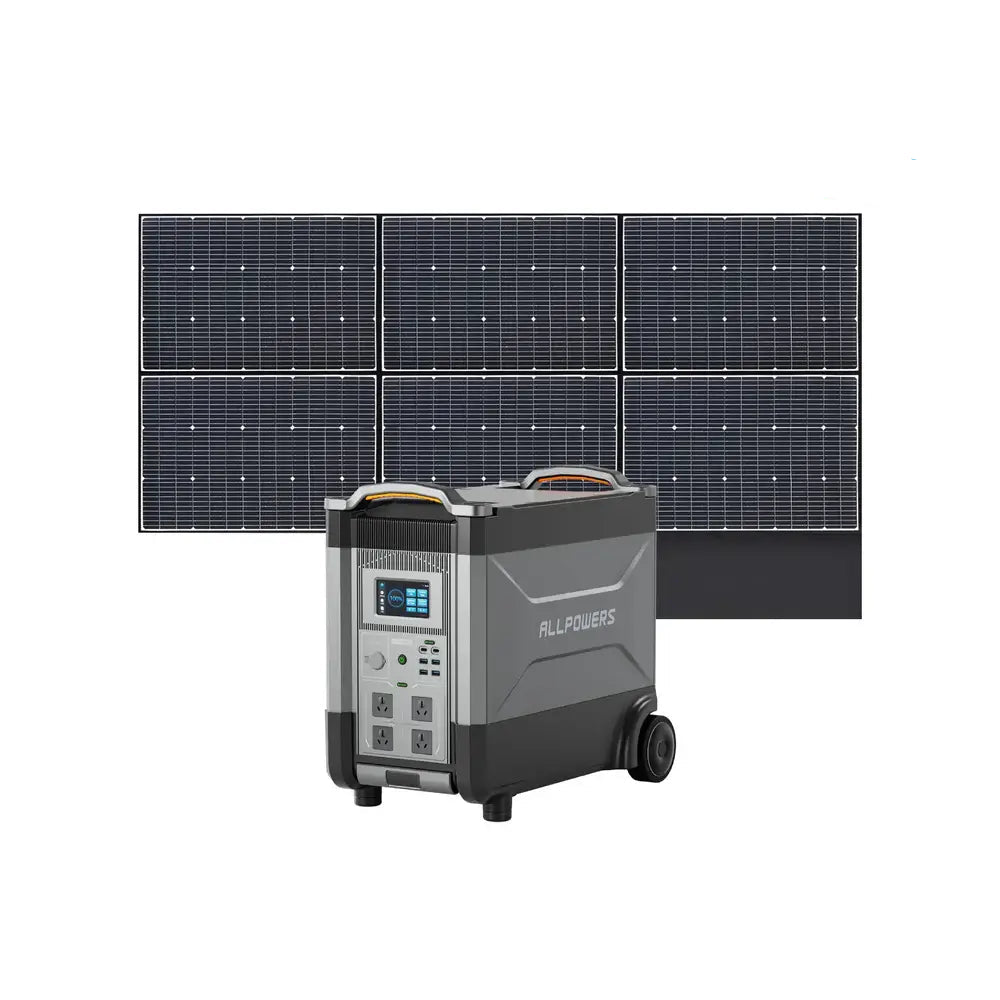
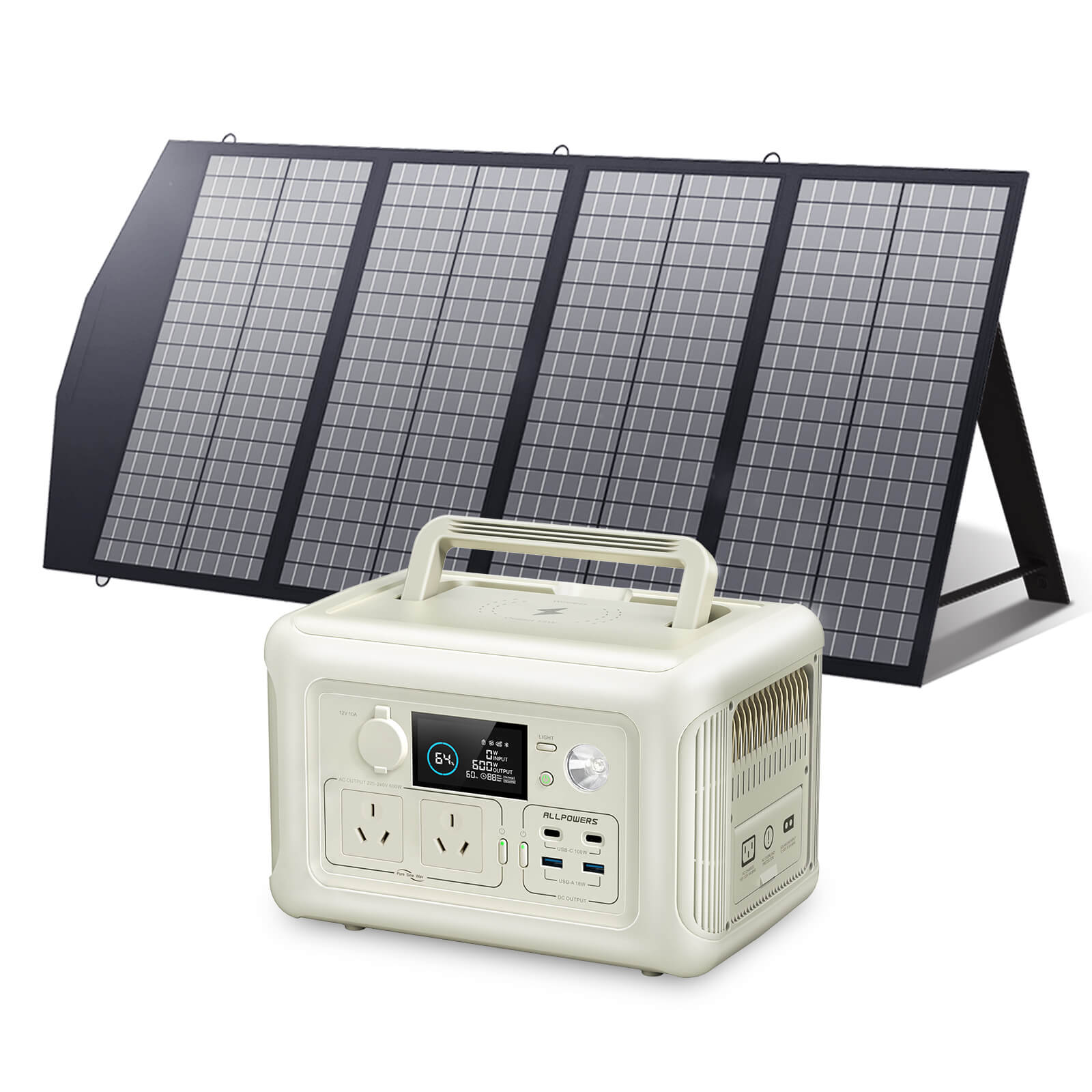


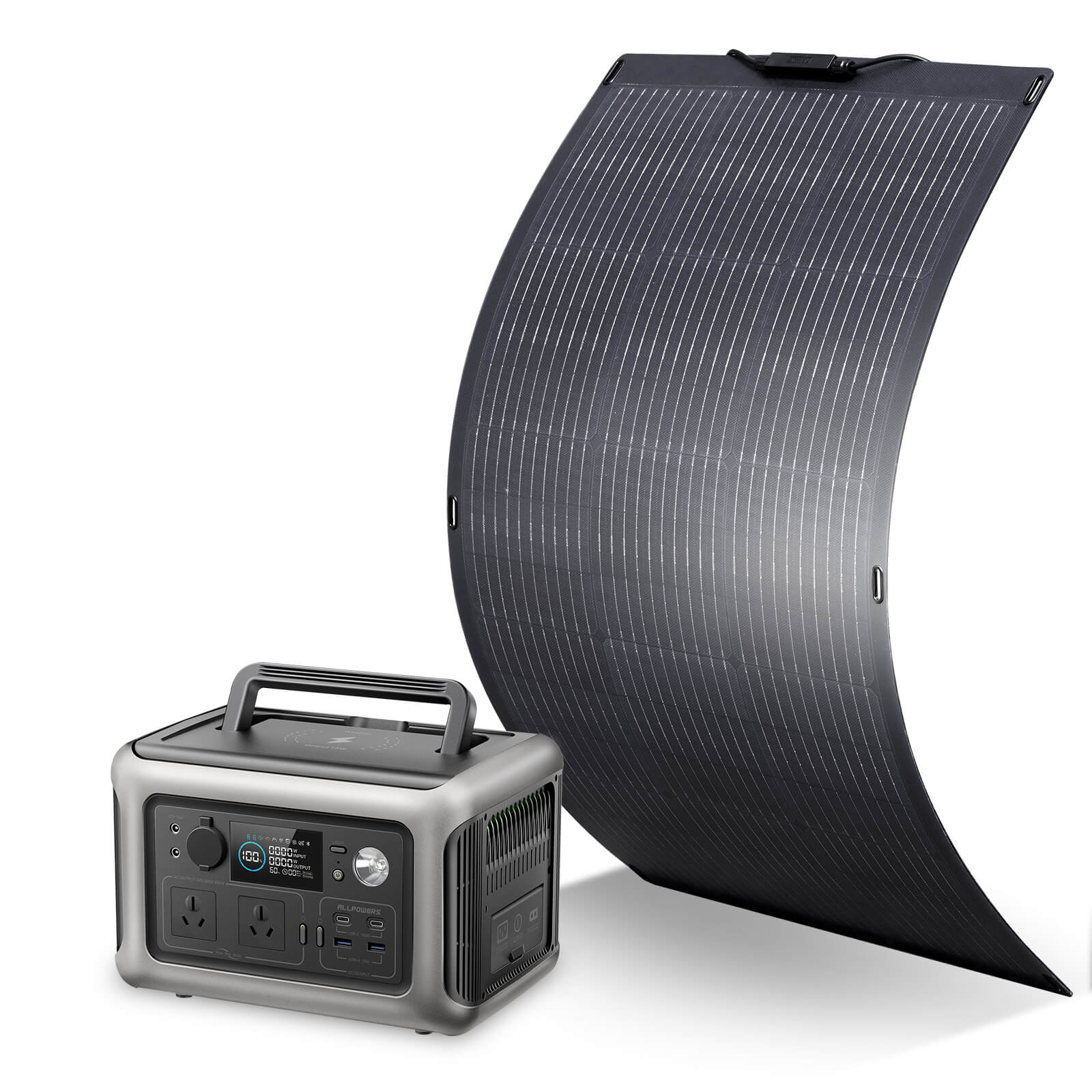
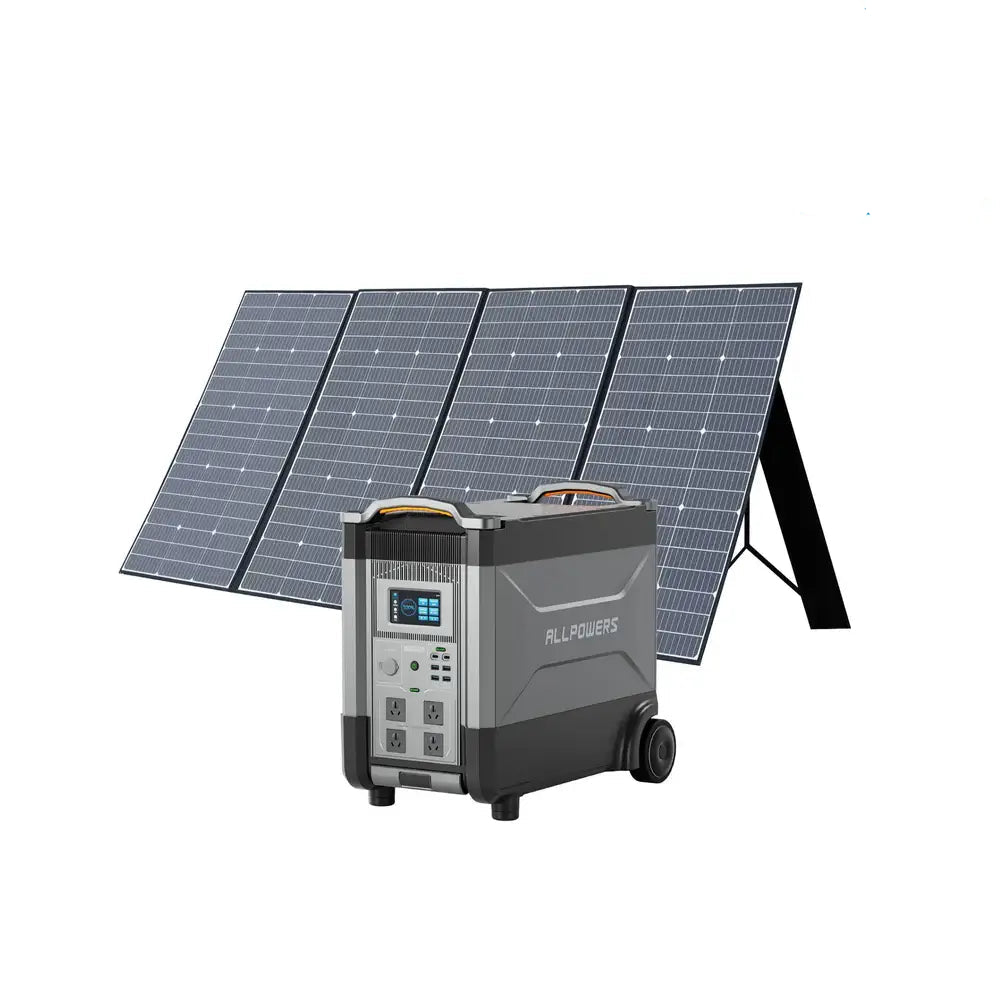
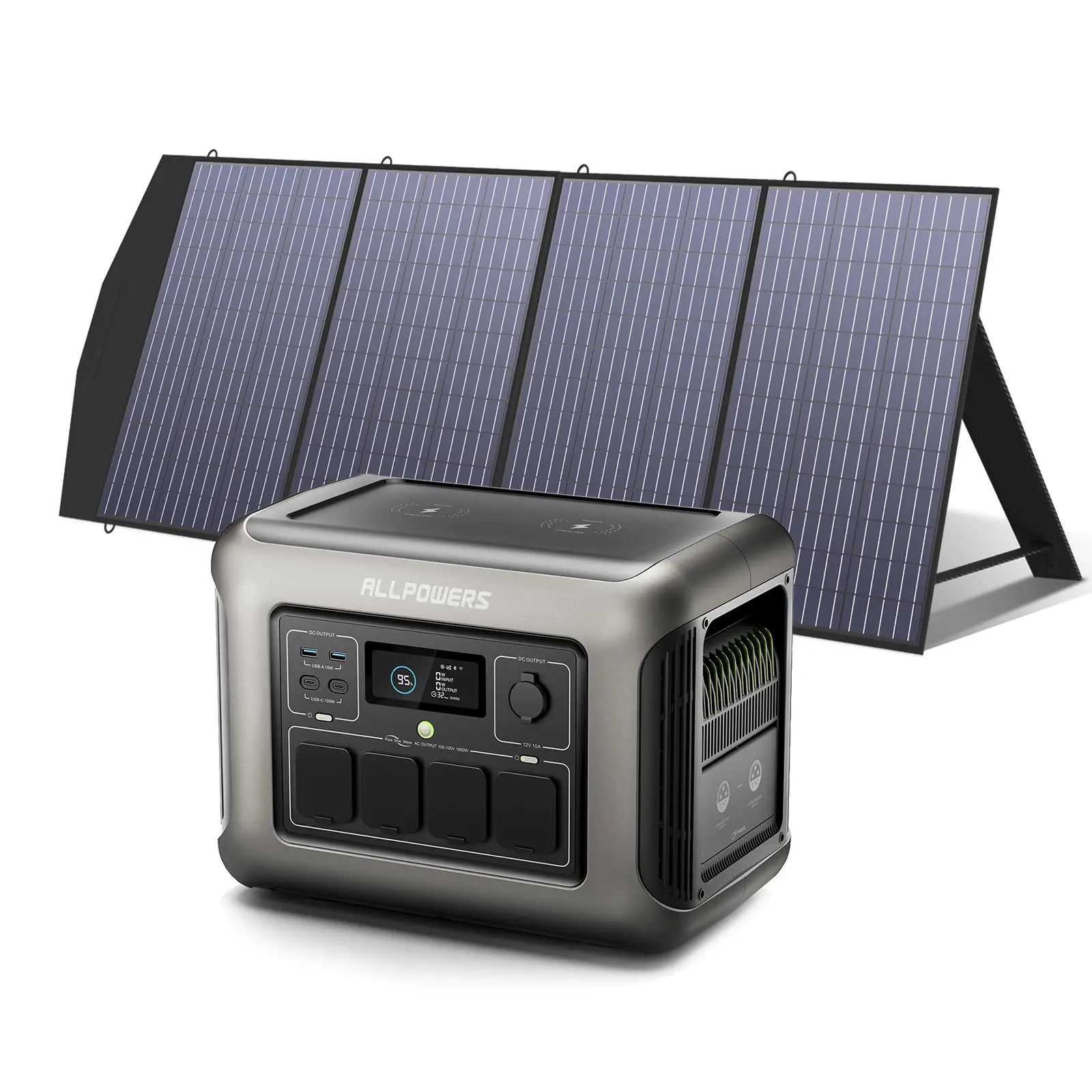
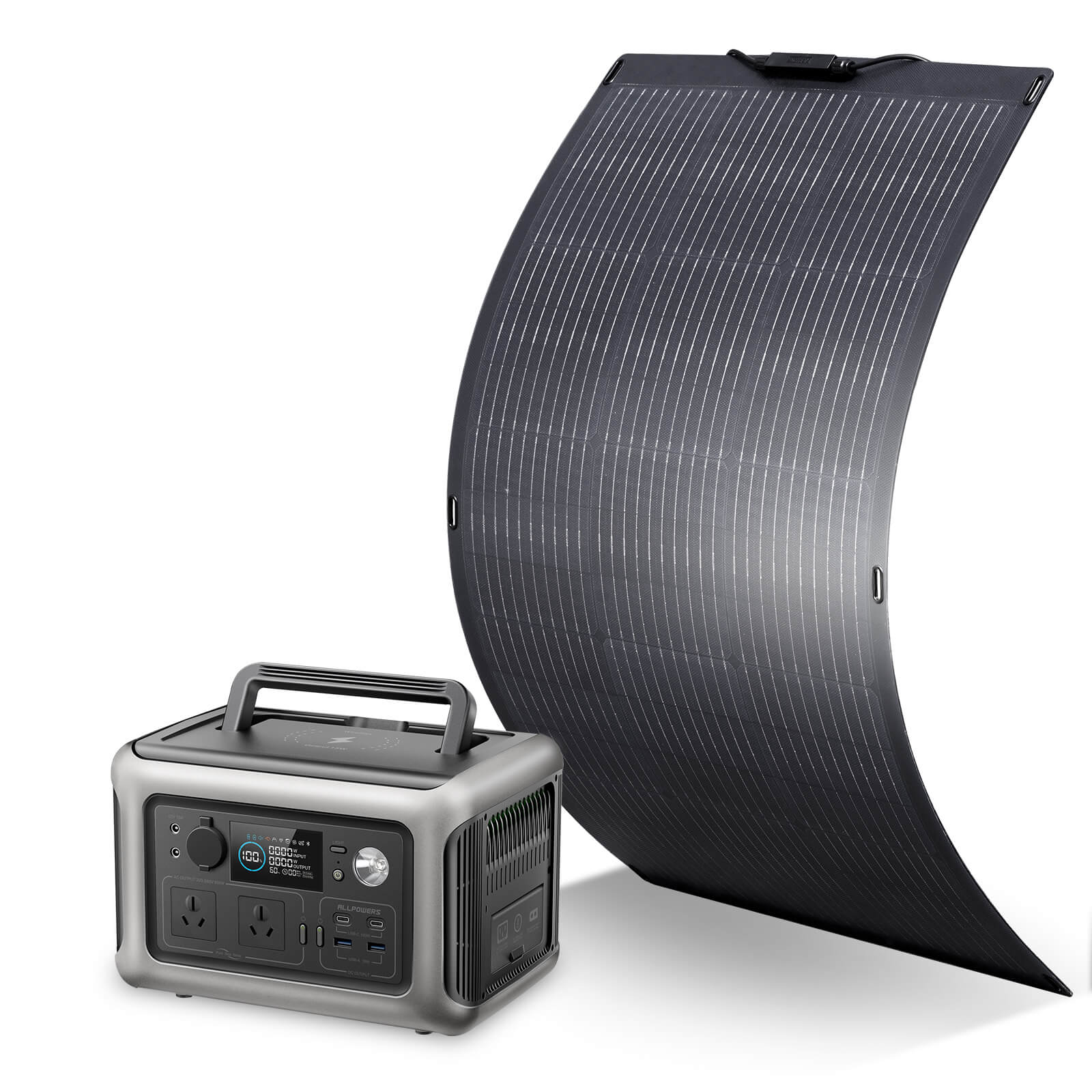

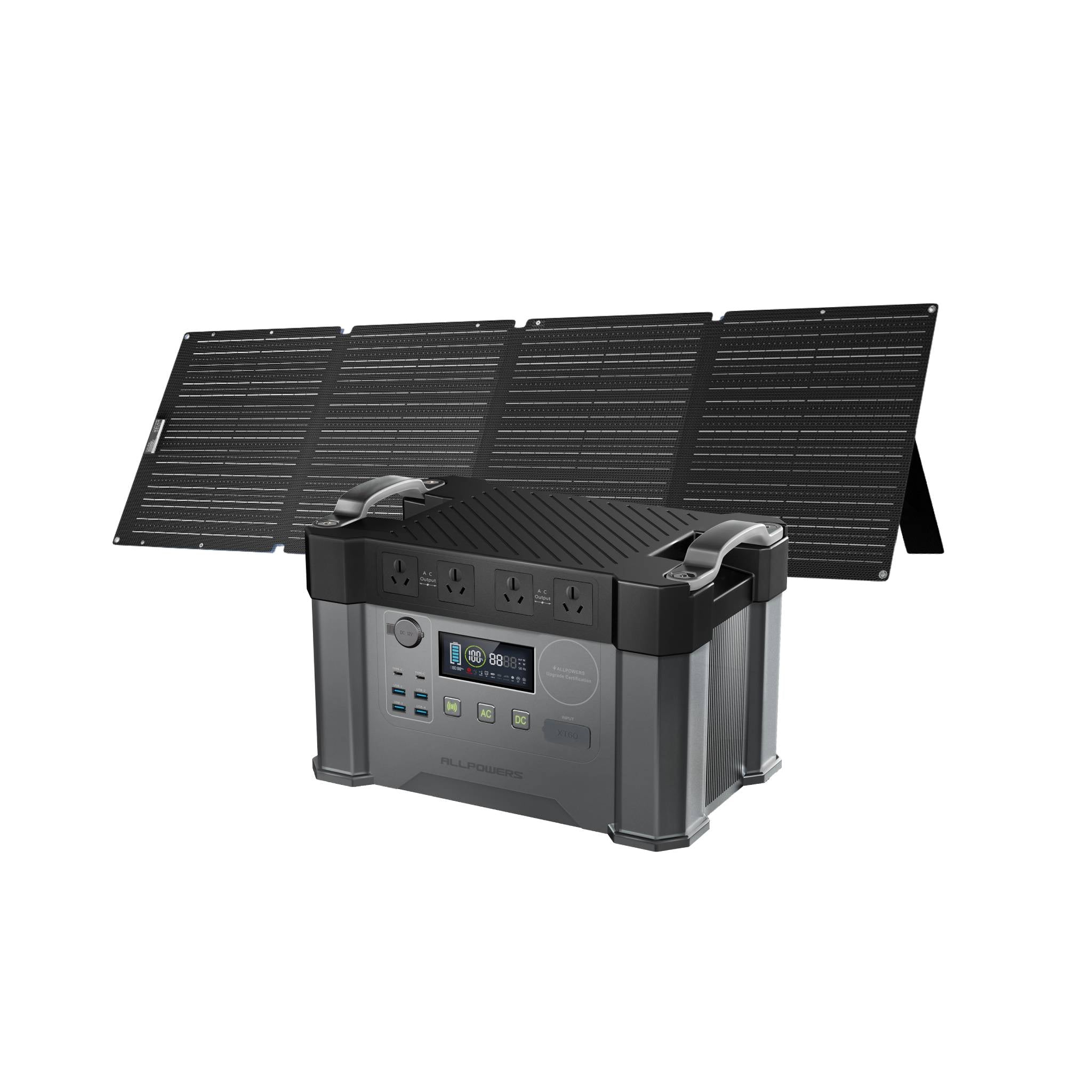





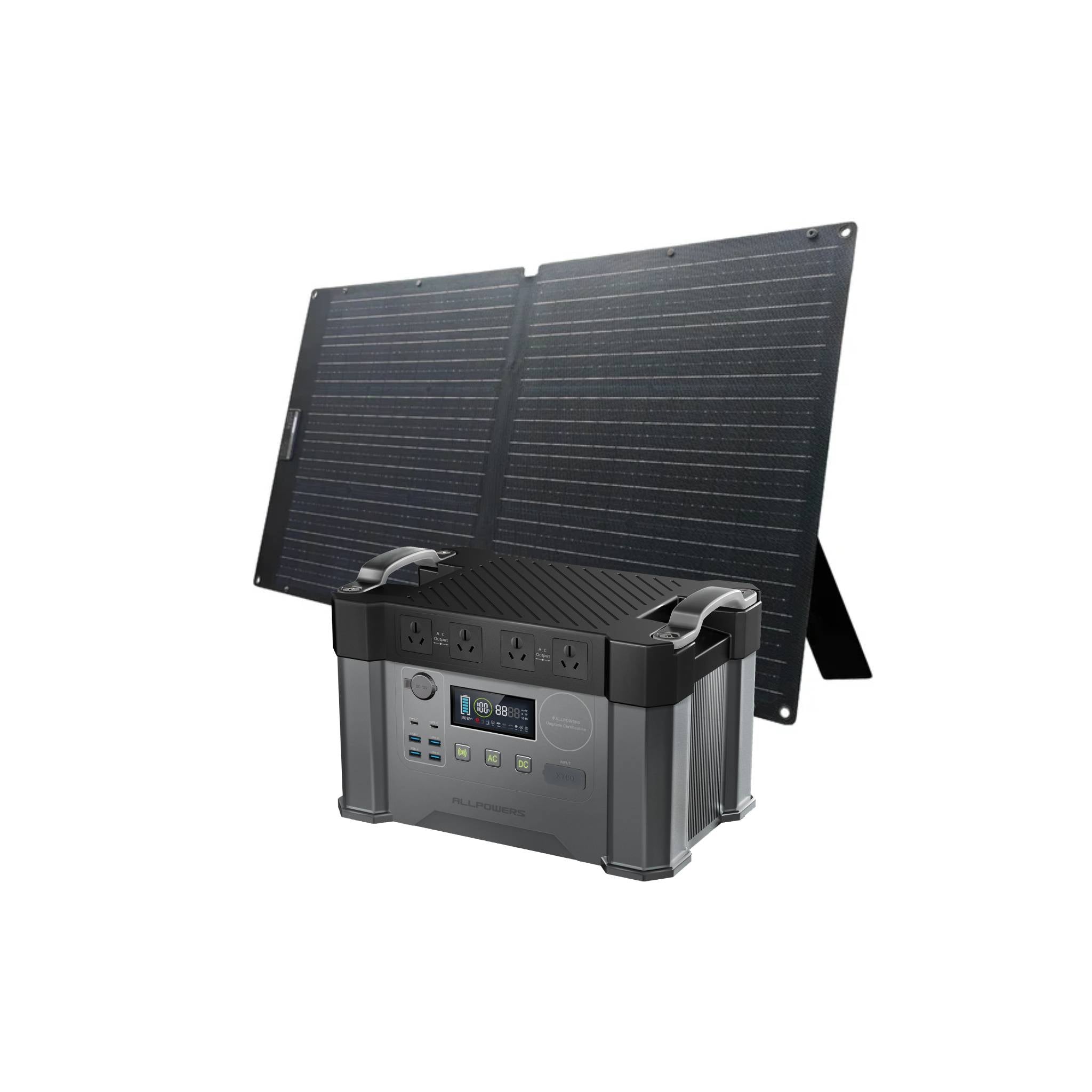
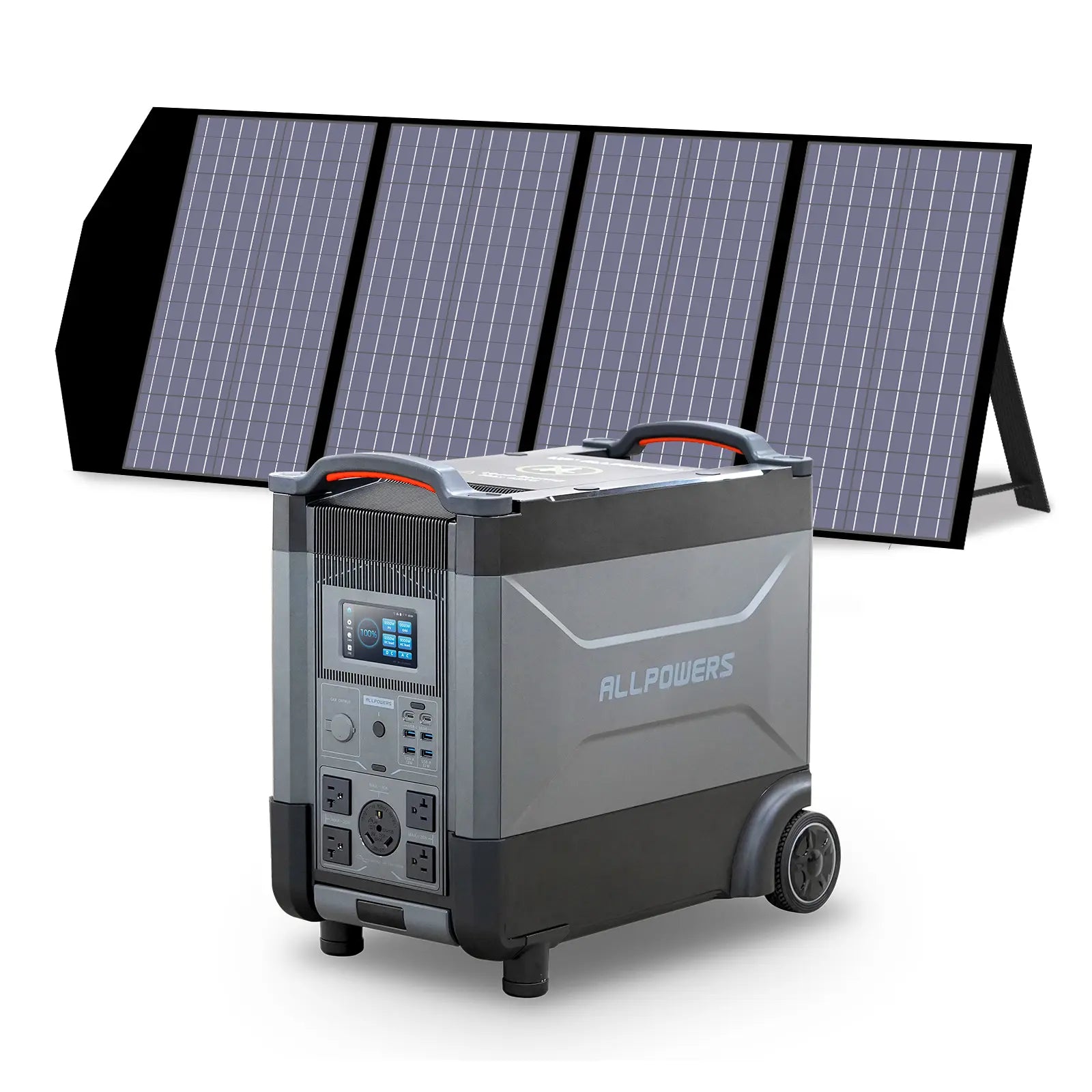

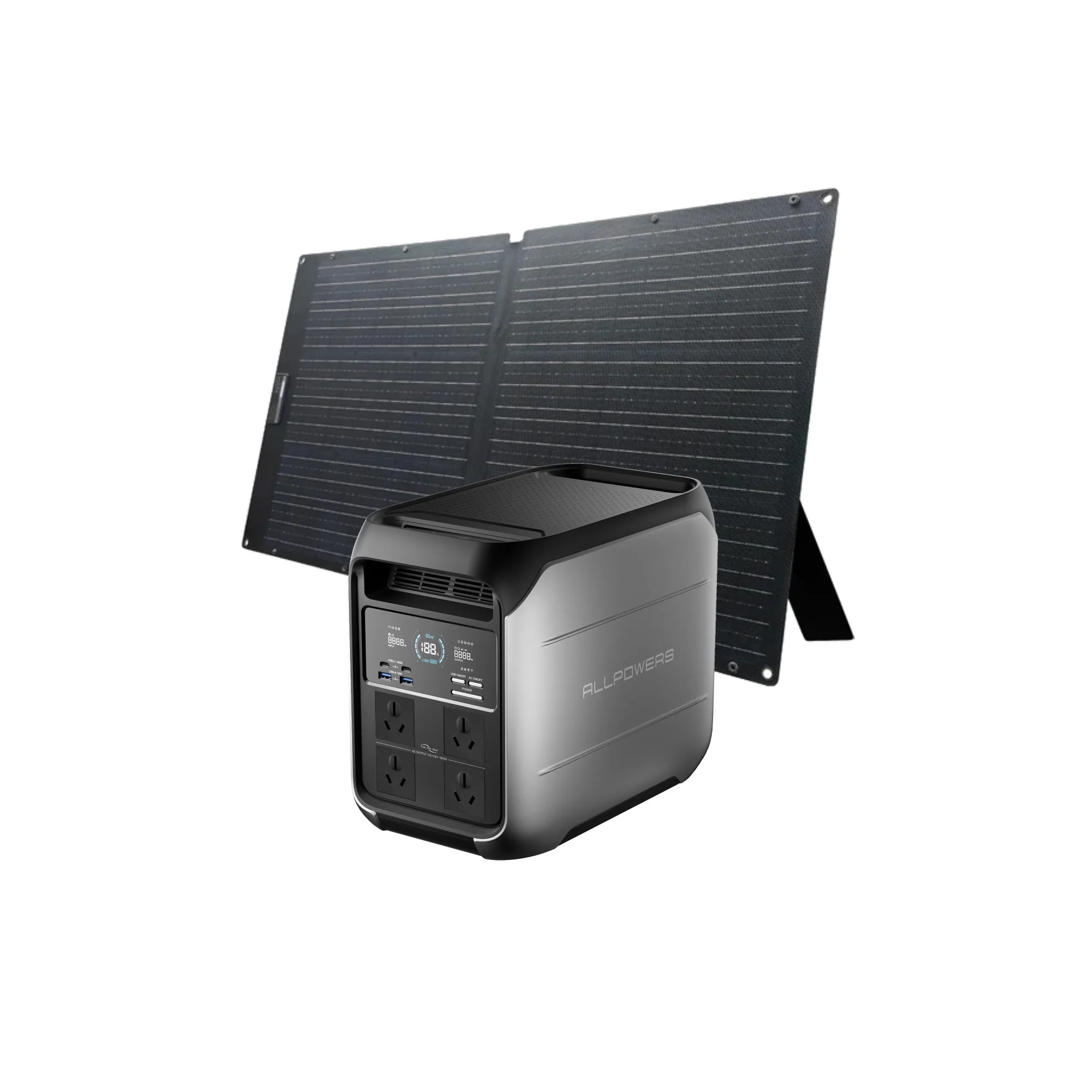
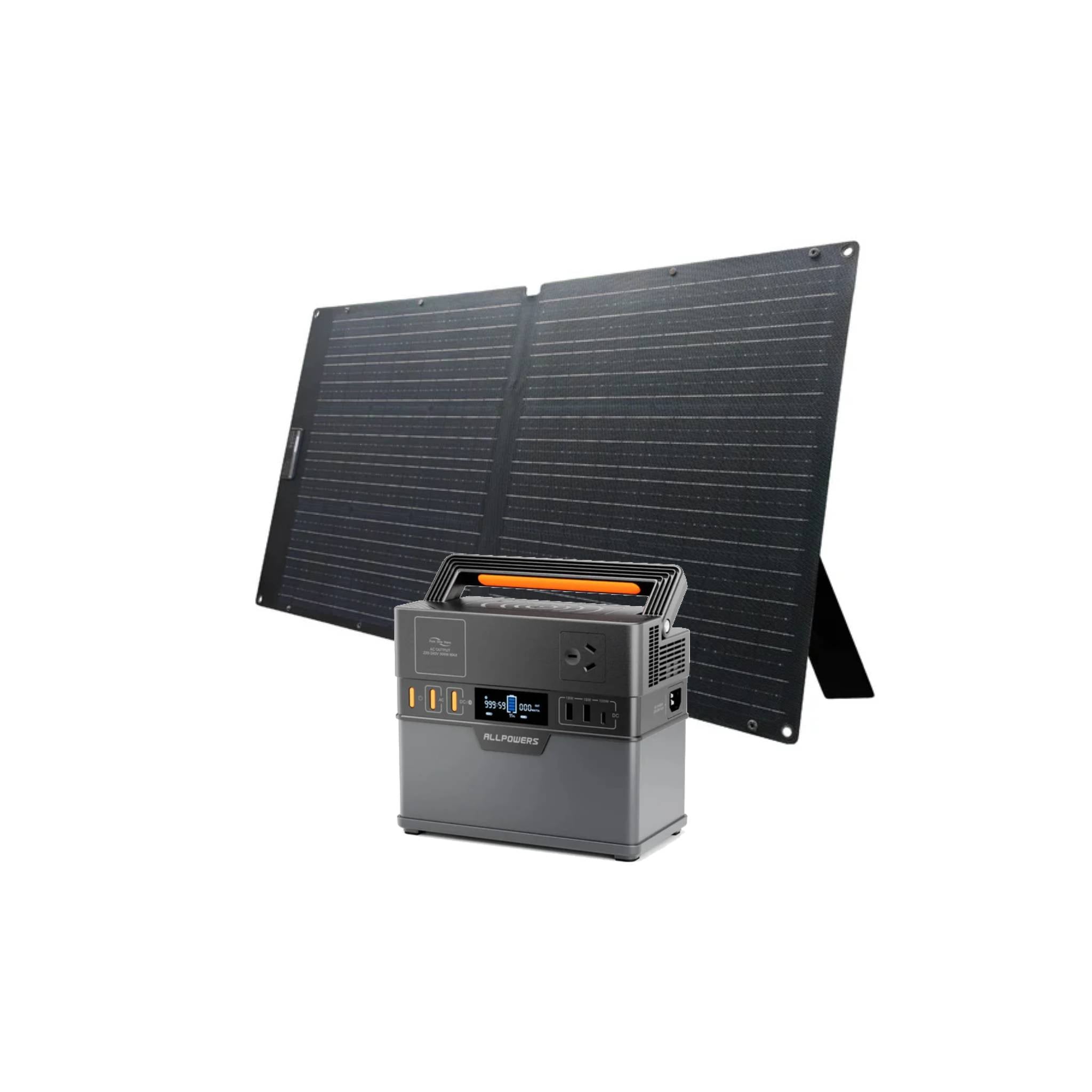









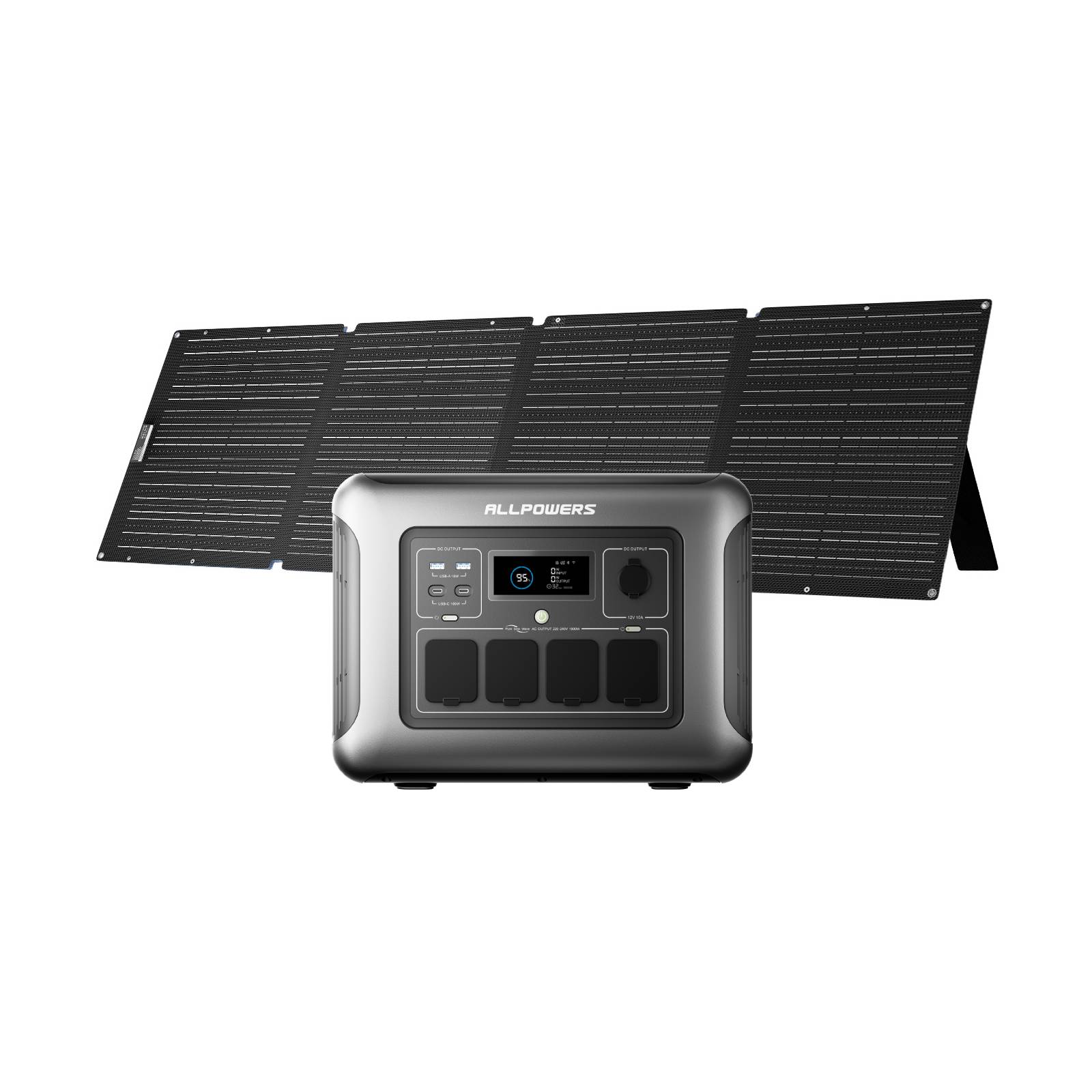


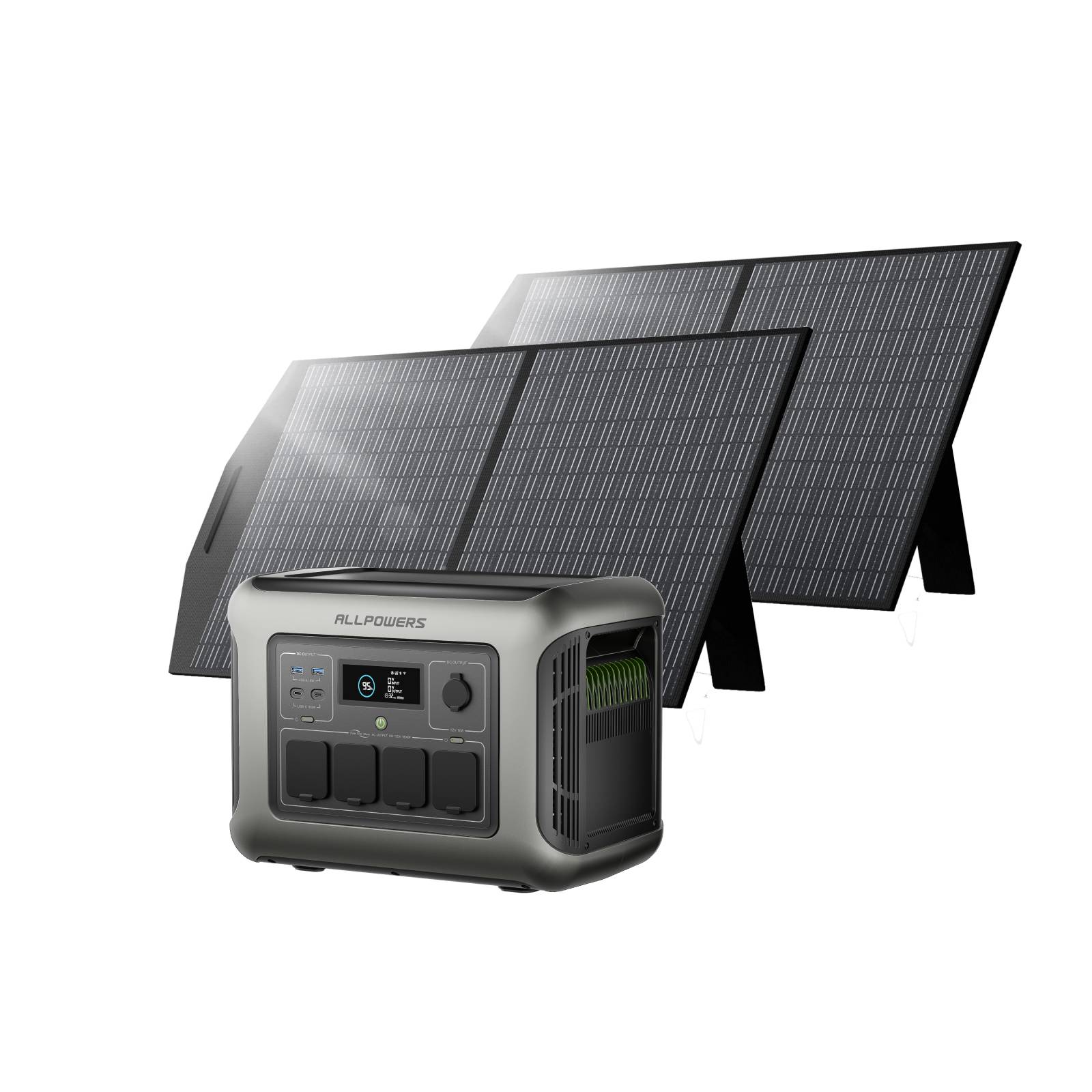

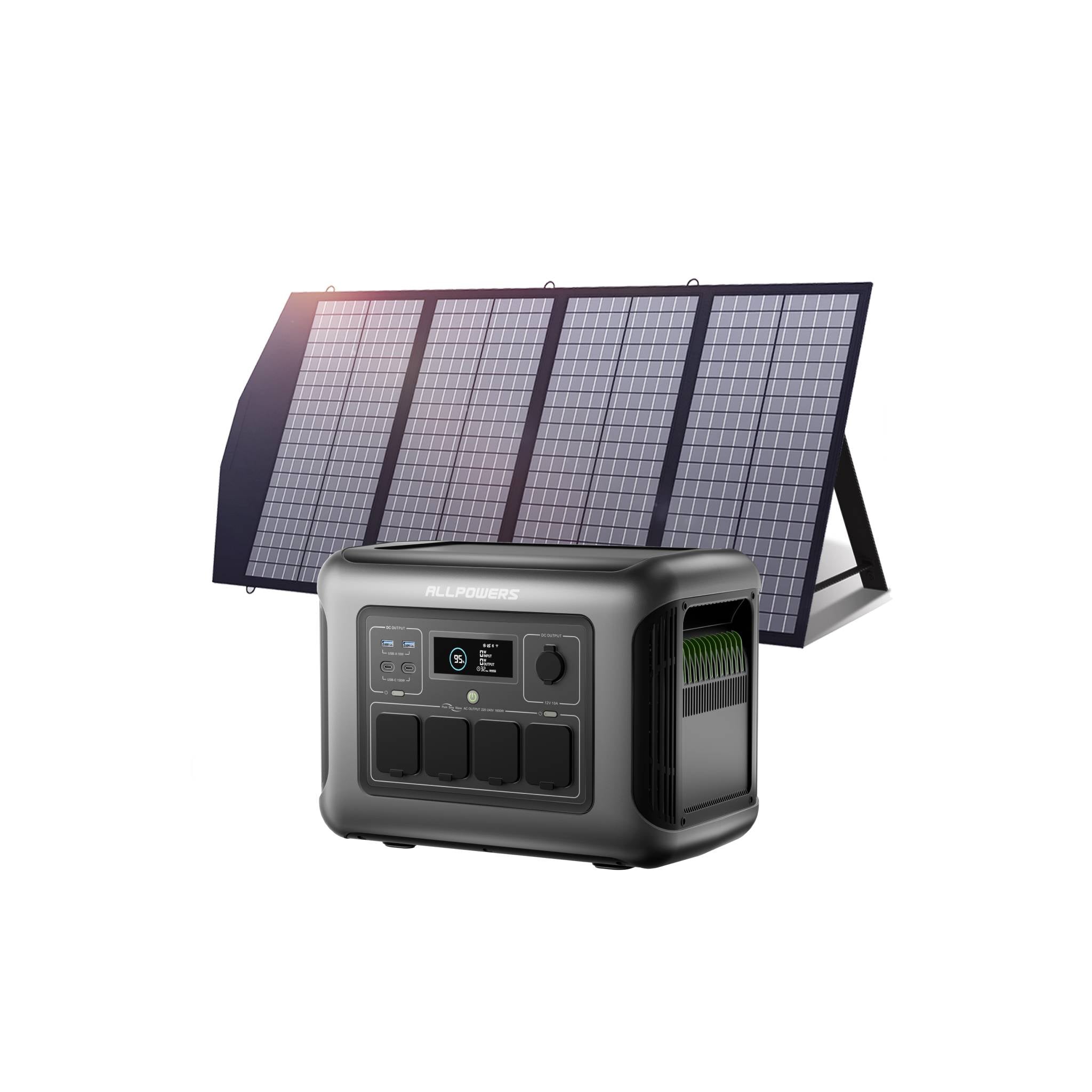


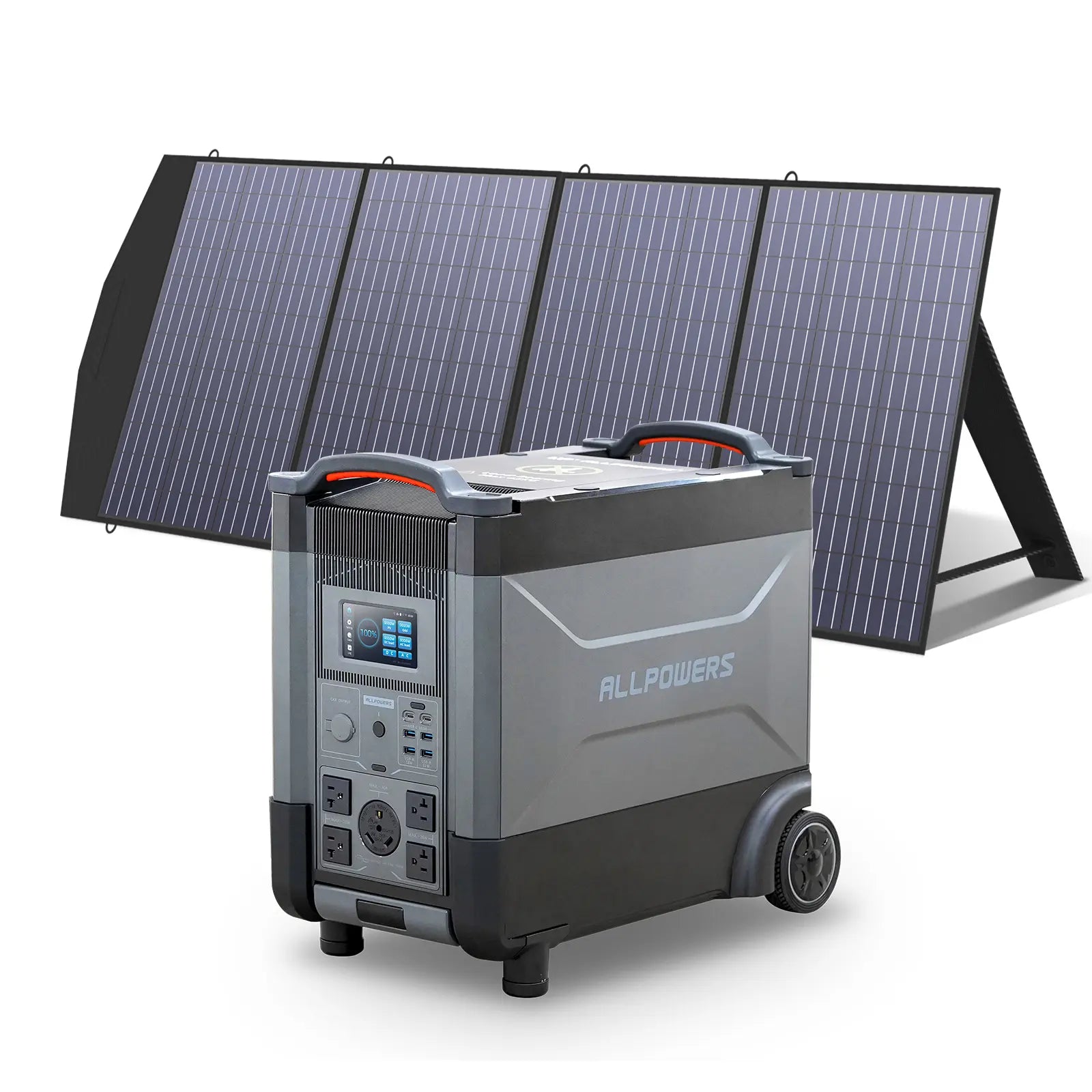
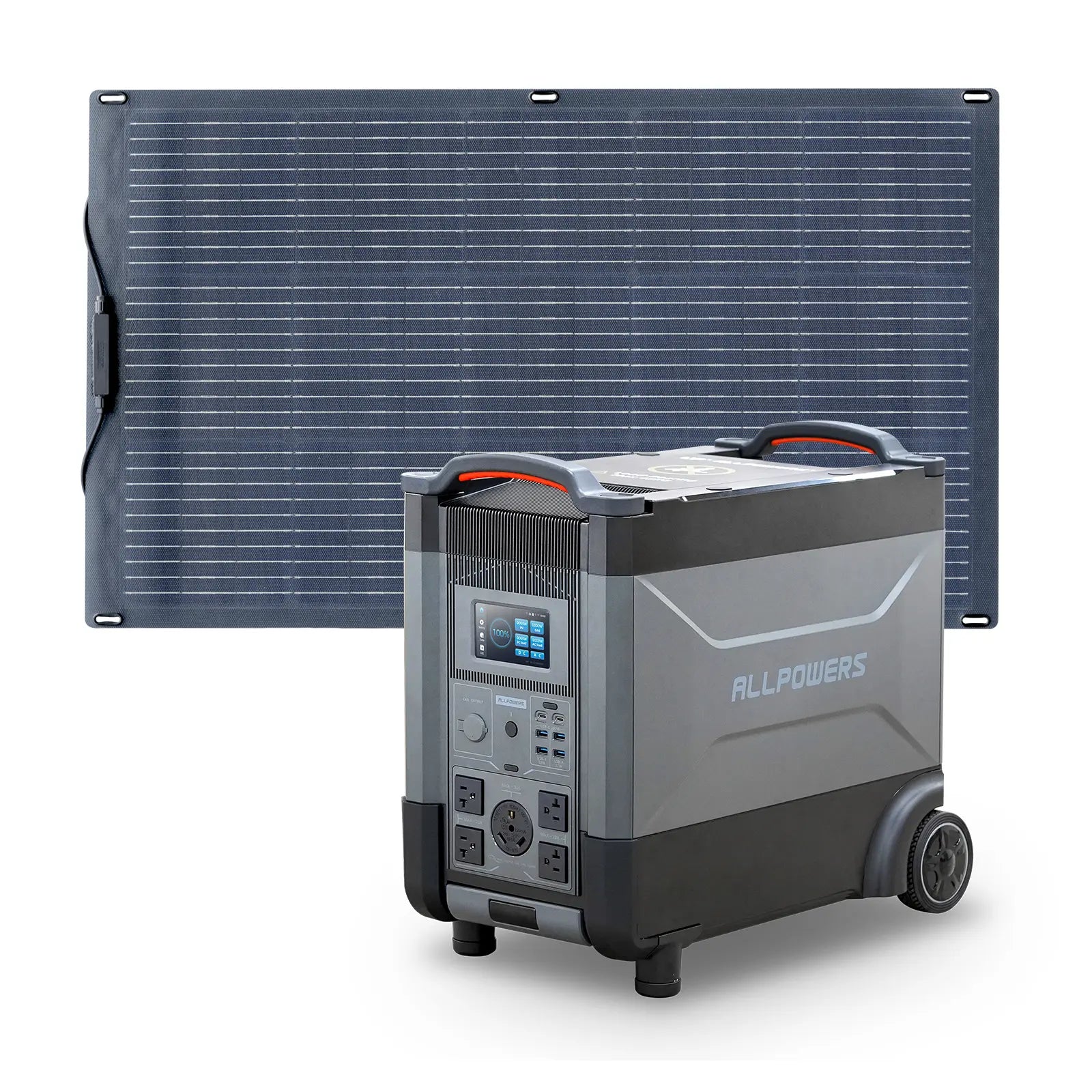
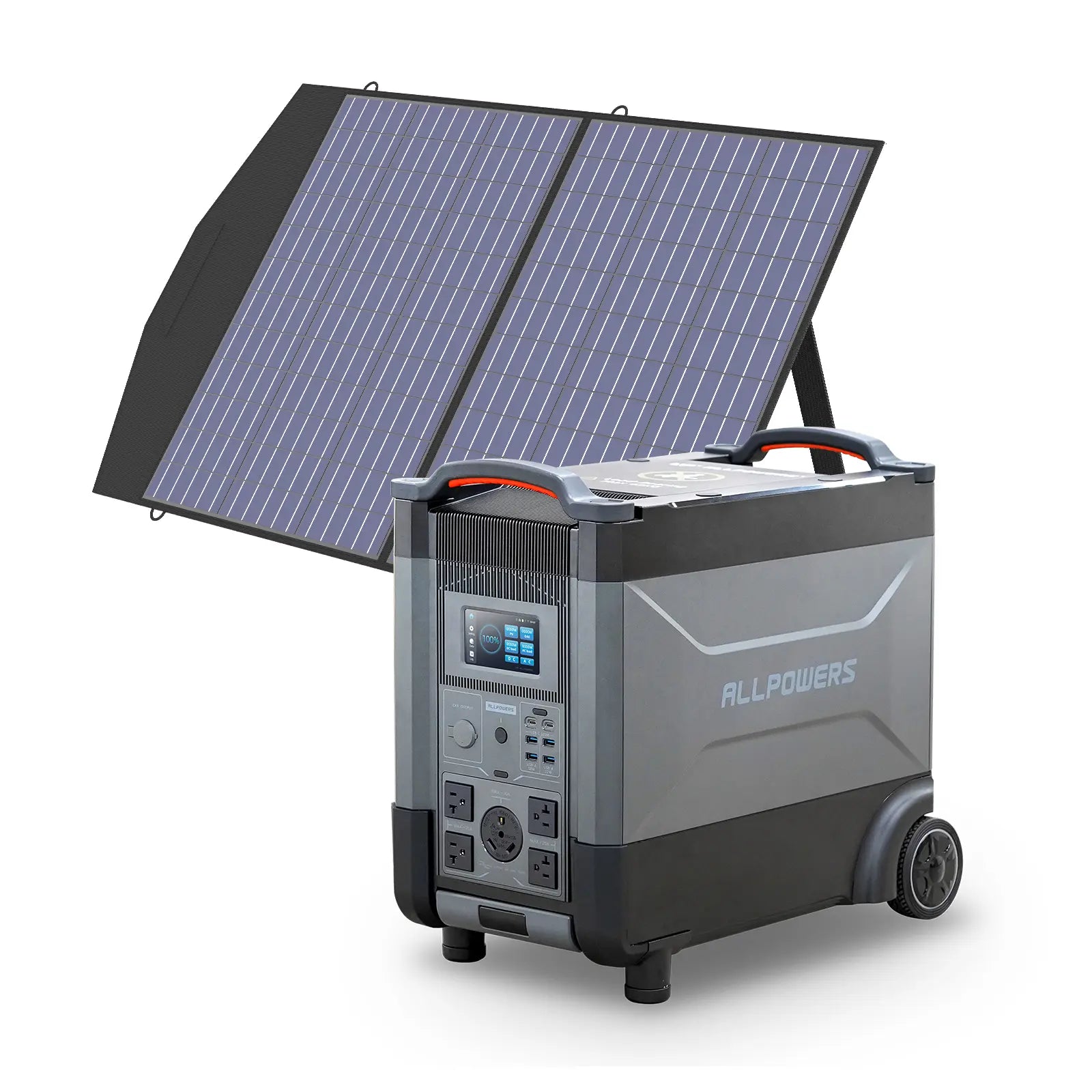
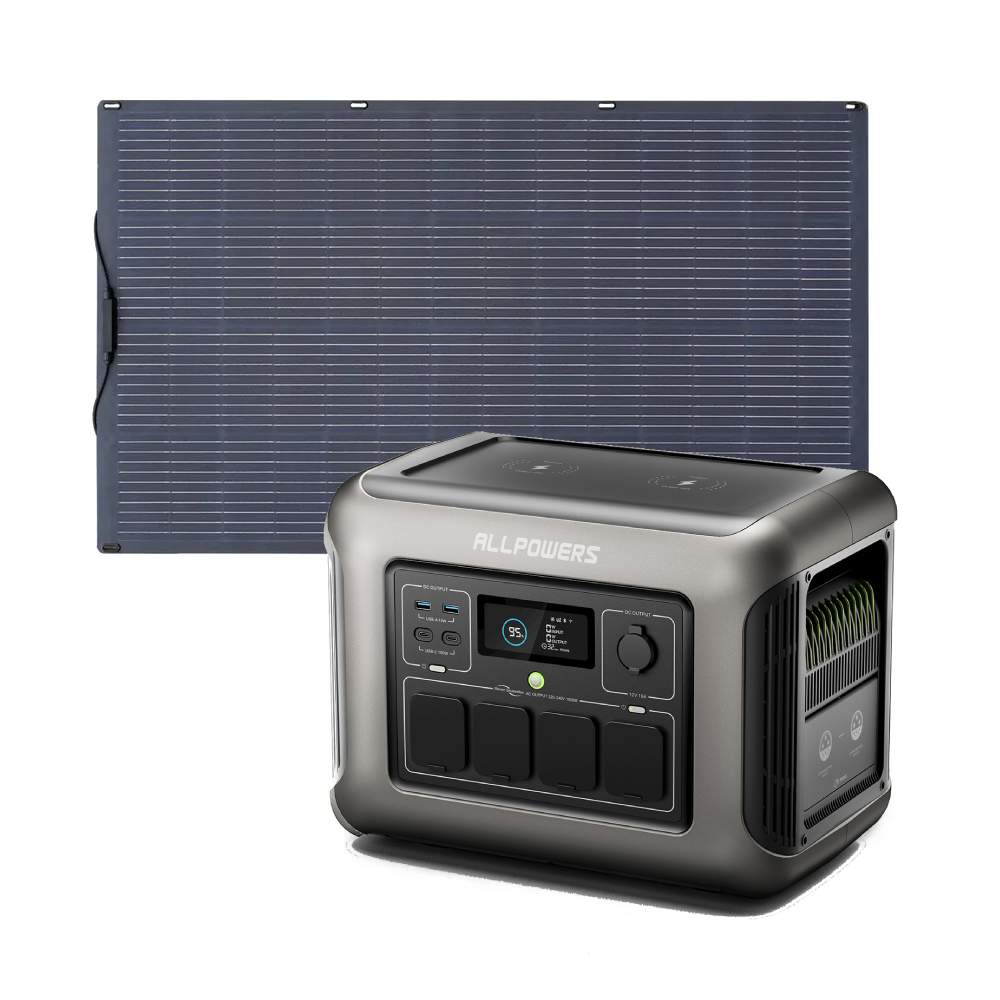
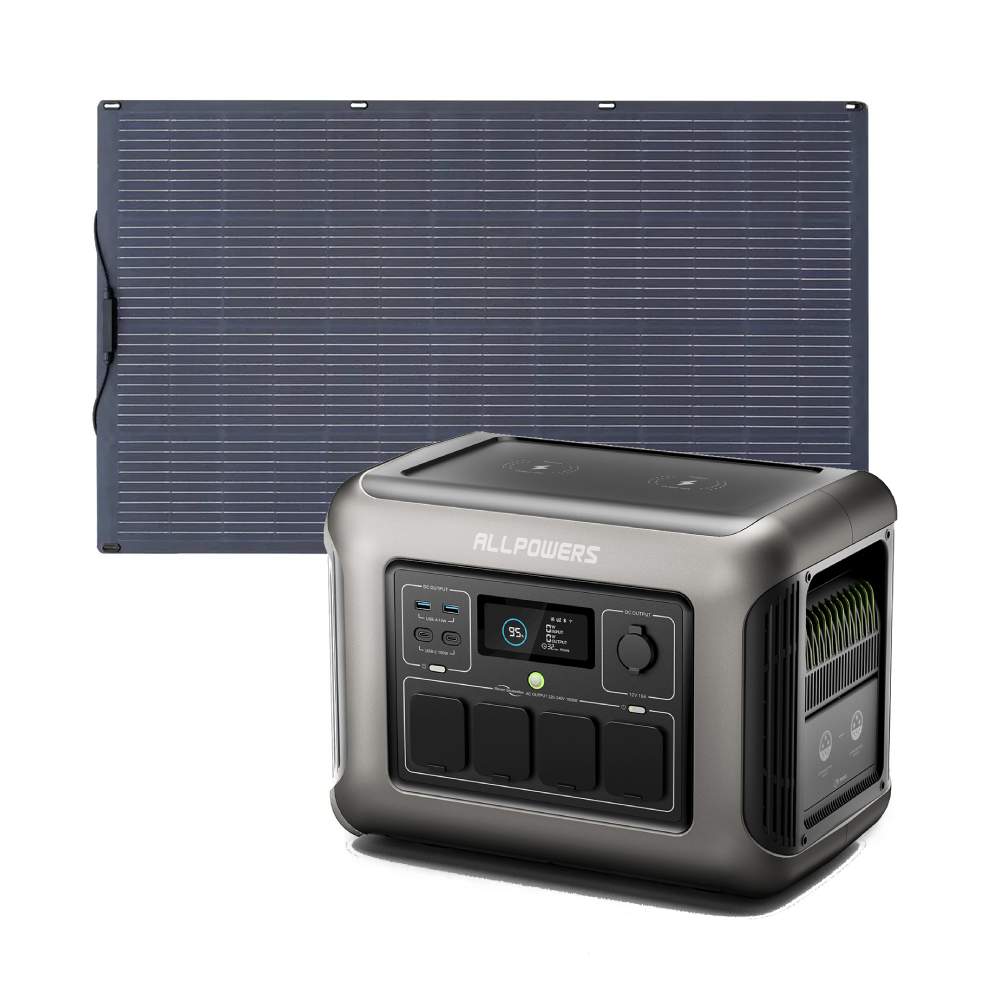
Power Your Fishing, Wherever You Are
Power for Every Fishing Scenario
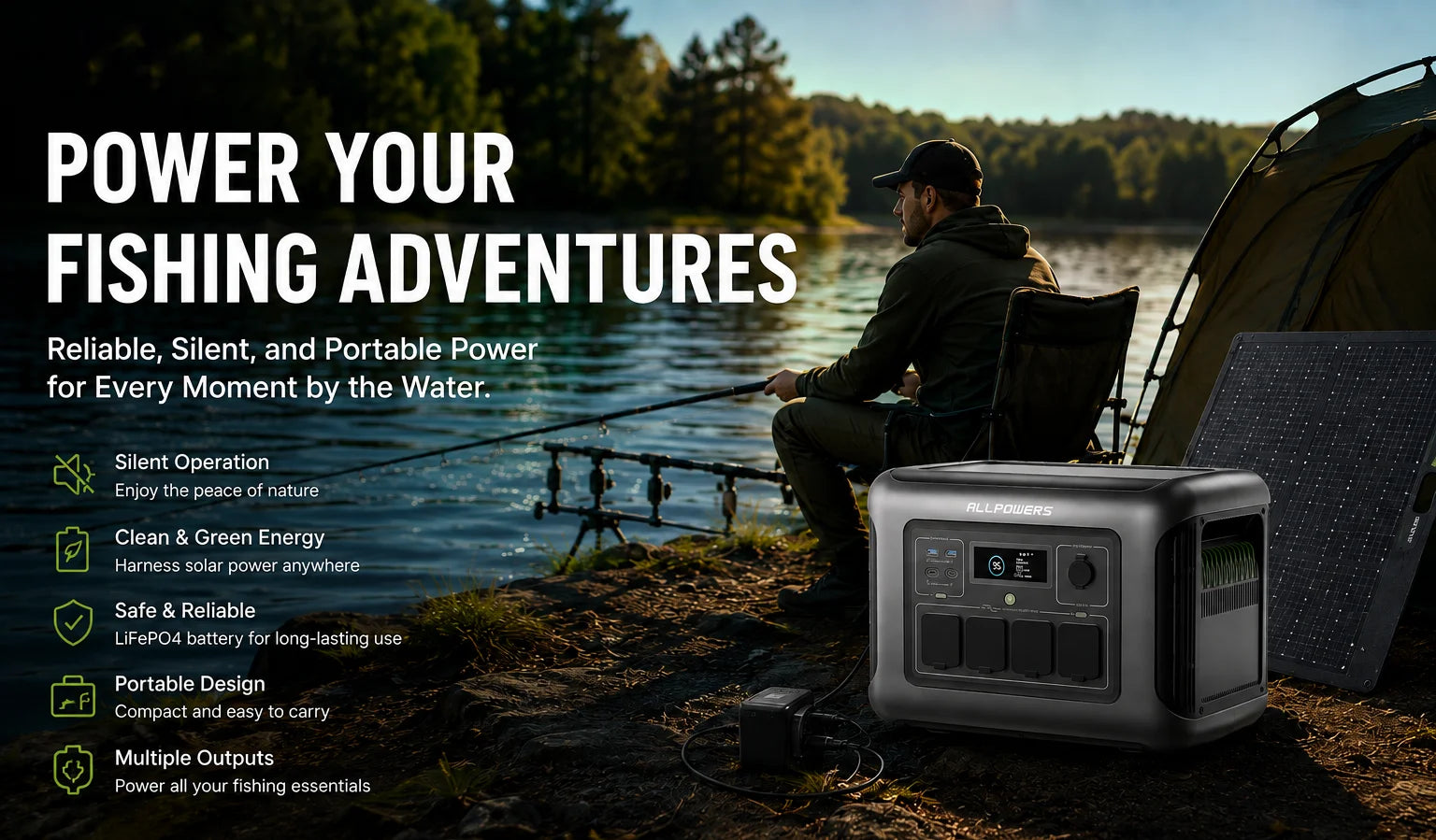
Whatever the conditions, stay powered throughout your fishing trip — from fish finders and lights to fridges, heaters and other essential gear.


Power Your Fishing Trip, From First Cast to Last
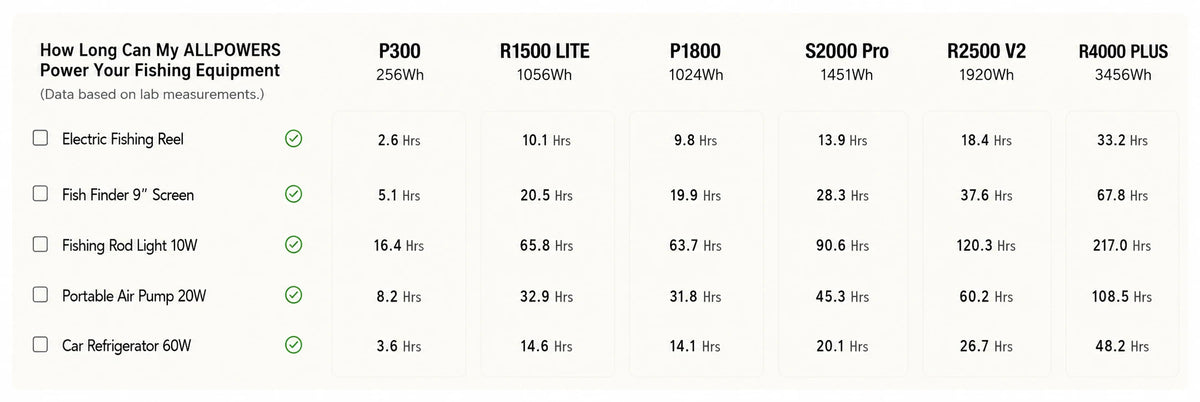
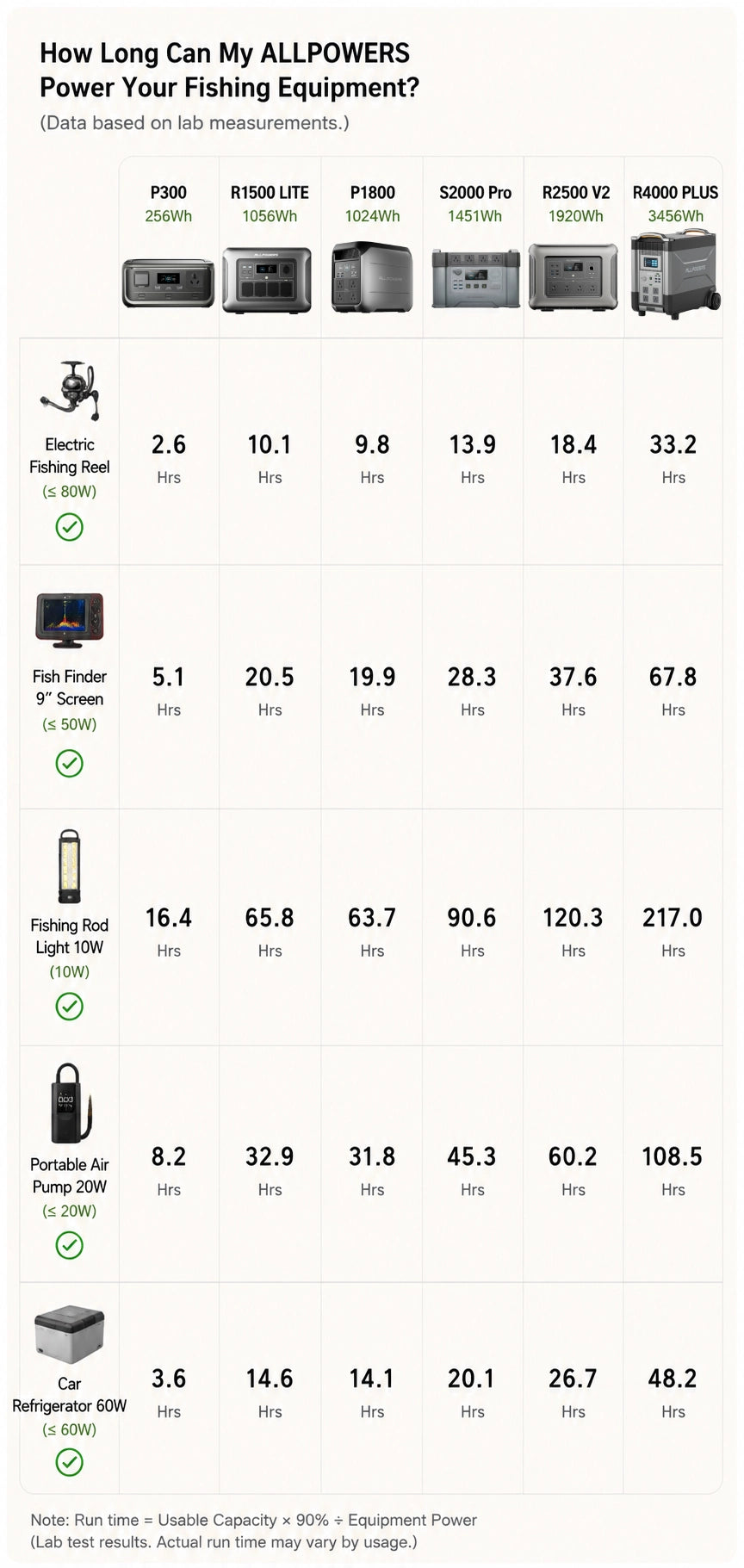
See how long ALLPOWERS portable power stations can keep your essential fishing gear running — from fish finders and electric reels to fishing lights, air pumps and portable fridges.
Small note:Estimated runtimes based on lab measurements. Actual runtime may vary depending on device power consumption, conditions and usage.
Compare
Find Your Perfect Fishing Power Station


Night fishing
Car refrigerator
Multiple devices
Ice fishing
Coffee Maker
Electric Grill
Boat fishing
long-distance camping
More higher power equipment
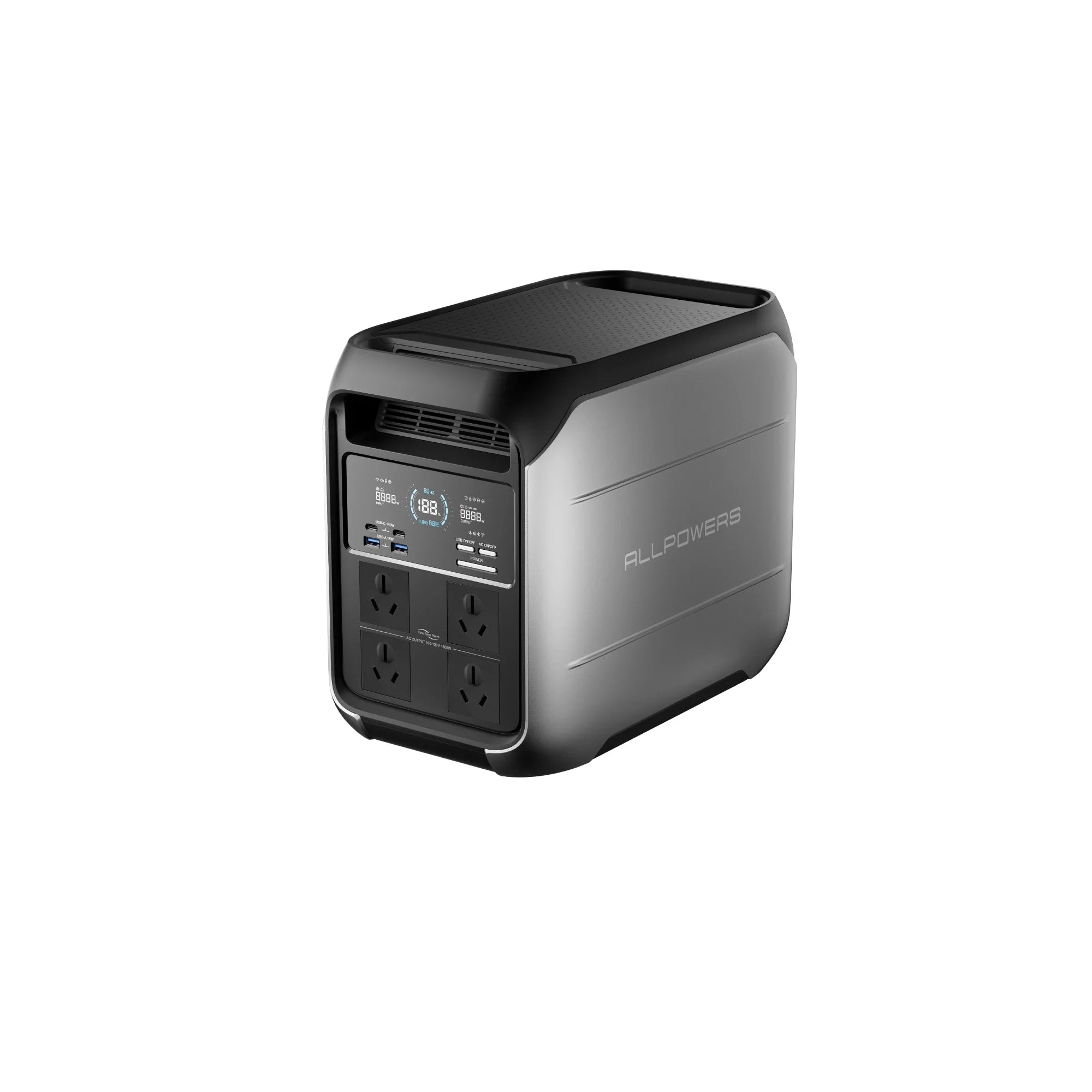
1056Wh
1024Wh
1451Wh
4x 240V (1600W Total)
4x 240V (1800W Total)
4x 240V (2400W Total)
15kg /33.07lb
13kg /28.66lb
13kg / 28.66lb
41.3cm*31.2cm*26.5cm
37.1x20.8x29.6 cm
37.5 x 24.5 x 25 cm
1200W max
650W Max
1000W Max
LiFePO4 3500+ Cycles
LiFePO4 4000+ Cycles
Ternary lithium battery 2500+ Cycles
Compare
Need power for a full remote base camp?
Large fishing boat
Aluminum alloy boat
2–4 people
Serious Fishing
Offshore Fishing
Remote Fishing Base
Serious Fishing
Offshore Fishing
Remote Fishing Base
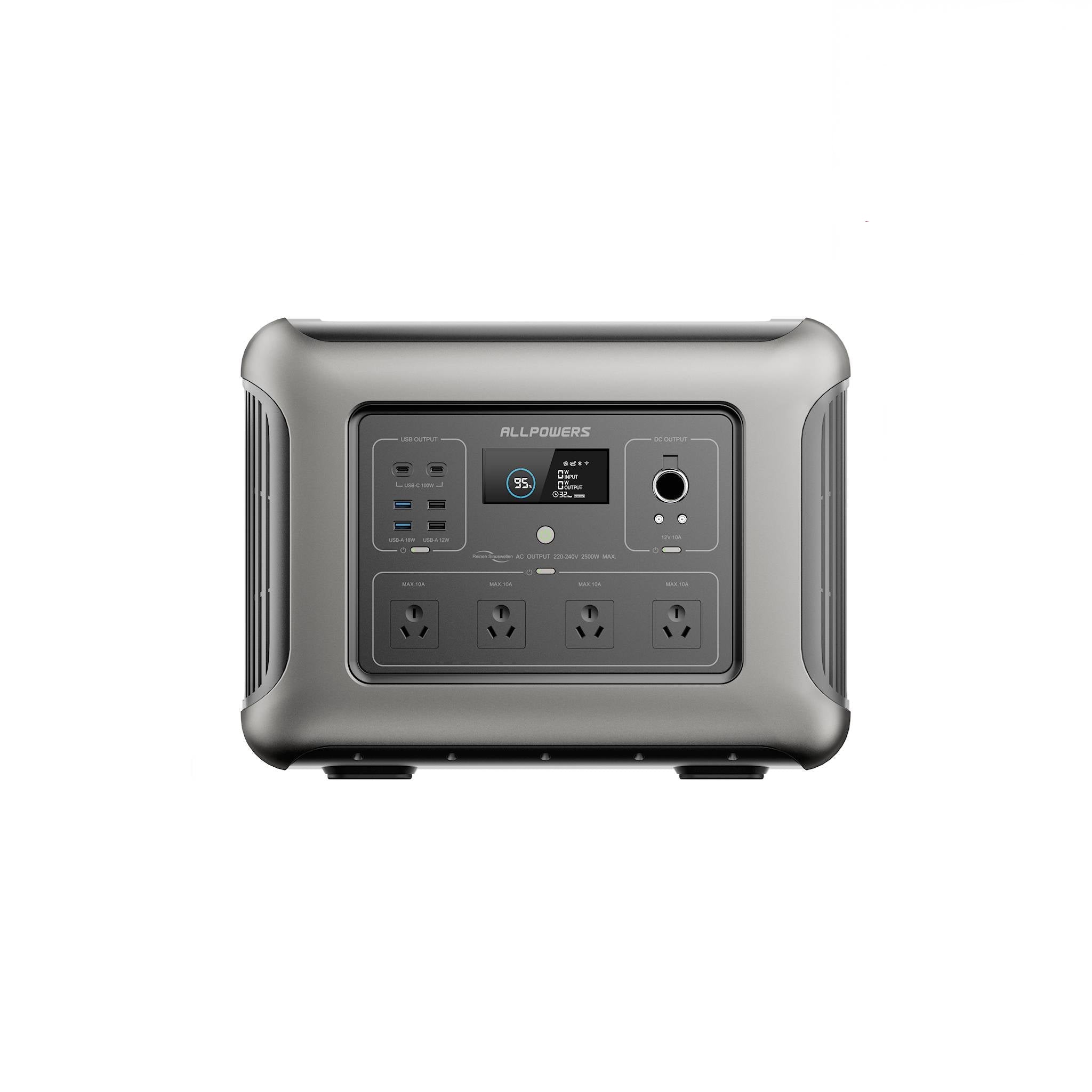
1920Wh
2880Wh
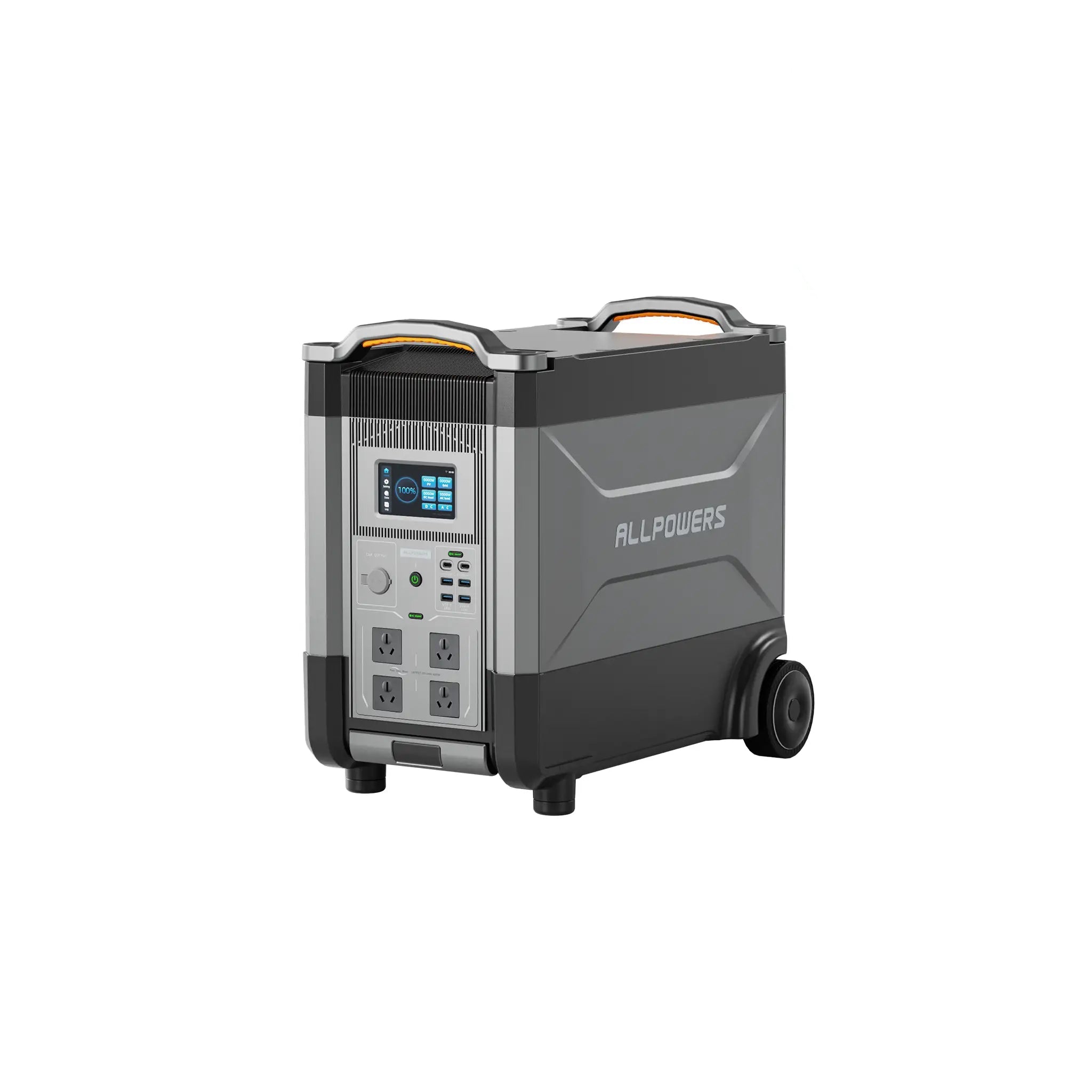
3456Wh
4x 240V (2500W Total)
4x240V(4000W Total)
4x240V(4000W Total)
1000W Max
2000W Max
2000W Max
24.5 kg / 54.01lbs
40.5KG/89.3 lbs
45KG /99.2 lbs
45.6 x 36.0x 34.6 cm
54*49*30cm
54*49*30cm
LiFePO4 3500+ Cycles
LiFePO4 3500+ Cycles
LiFePO4 3500+ Cycles
What Our Users Say
FAQ
What size power station do I need for a fishing trip?
It depends on the equipment you plan to run and how long you’ll be away.
- For phones, cameras, LED lights and small electronics, a 256–299Wh model such as the VOLIX P300 or R600 may be sufficient.
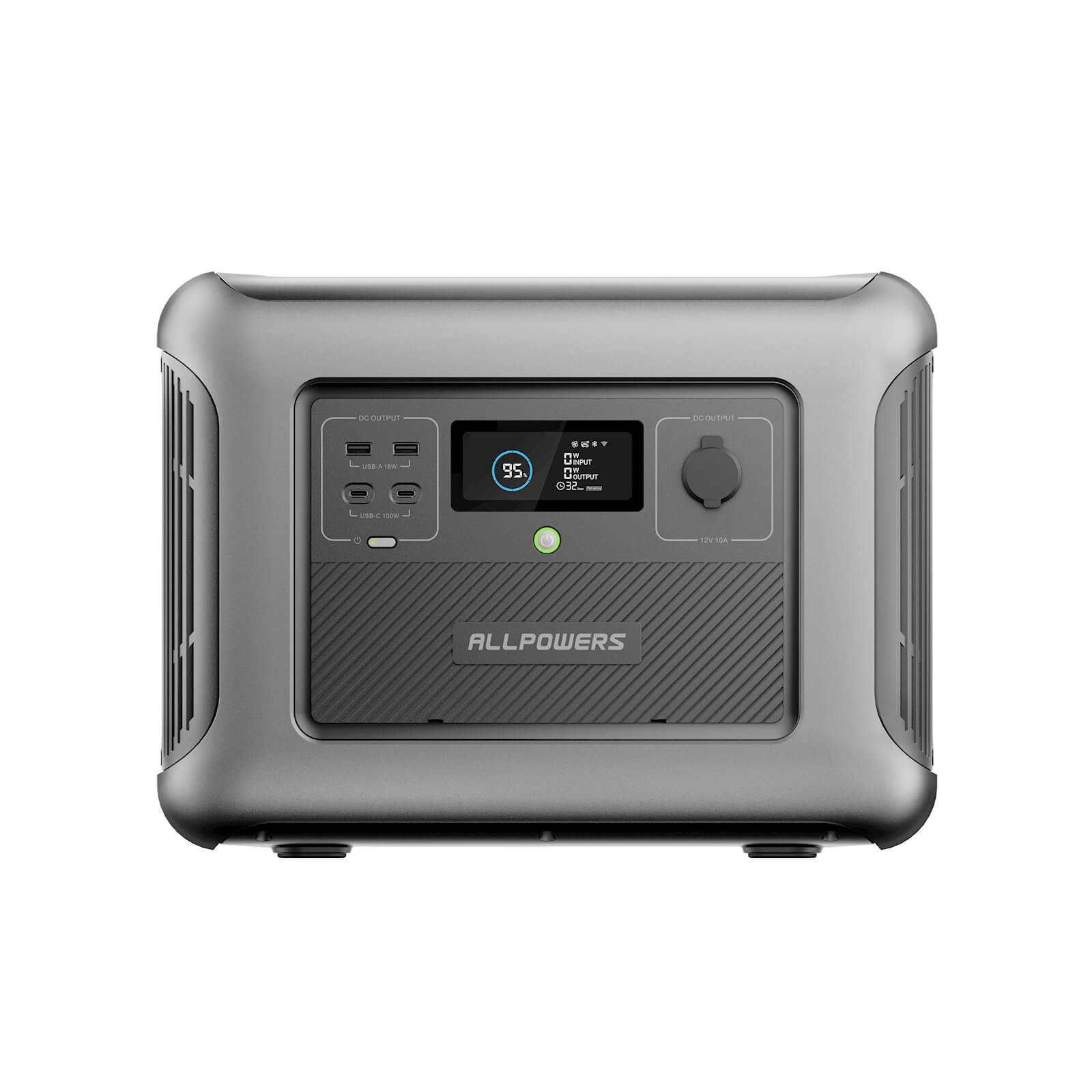
- For a portable fridge, fish finder and overnight lighting, the R1500 Lite offers a better balance of capacity and portability.
- For multi-day trips or several higher-powered devices, consider the P1800 or S2000 Pro.
Always check that the appliance’s rated wattage and start-up power are within the power station’s output limits.
How long can a power station run a portable camping fridge?
Runtime depends on the power station’s capacity, the fridge’s power consumption, ambient temperature and how frequently the compressor runs.
A simple estimate is:
Runtime = Battery capacity (Wh) × 0.85 ÷ Device power (W)
For example, the 1056Wh R1500 Lite could theoretically run a continuously operating 60W fridge for around 15 hours. In normal use, a fridge cycles on and off, so actual runtime may be longer. Results will vary by equipment and conditions.
Can I use an ALLPOWERS power station with a fish finder?
Yes, provided the fish finder’s voltage, connector and power requirements are compatible with the selected output.
Many fish finders can be powered through an AC outlet or an appropriate DC connection. Check the fish finder’s specifications before connecting it, and do not exceed the power station’s rated output.
Can I use a portable power station on a fishing boat?
A portable power station can be used on a boat when it is kept in a secure, dry and well-ventilated location.
Protect it from rain, spray, saltwater and accidental movement. Do not place it on a wet deck or close to areas where it could be splashed or submerged. Secure the unit before the boat is underway.
What are its advantages and disadvantages compared with fuel generators?
Advantages:
Quiet and Noiseless: Virtually silent during operation, suitable for camping, nighttime use, and home emergencies.
Zero Emissions, Safe and Environmentally Friendly: No fuel required, safe for use indoors, in tents, or in cars, with no risk of exhaust gas poisoning.
Maintenance-Free: No oil or spark plug changes required, simply plug in and charge, easy to operate.
Plug and Play: No cord required for starting, just flip a switch to power.
Disadvantages:
Low Energy Density: For a given volume, the power output is generally lower than that of a fuel-powered generator, limiting the time it can power high-power devices.
Long Charging Time: Although fast-charging technology is rapidly developing, charging still takes tens of minutes to several hours, compared to the minutes it takes to refuel.
Long-Term Storage Degrades: Lithium batteries degrade naturally with extended periods of disuse, while gasoline-powered generators can be stored for extended periods of time as long as they are properly fueled.
How often do I need to charge the power station and how do I store it correctly?
Daily Maintenance: Even when not in use, it's recommended to perform a charge-discharge cycle every 3-6 months (charge to 80%-90%, then use to 20%-30%) to maintain battery activity.
Long-Term Storage: Never store a fully charged or fully charged battery for extended periods. The optimal storage level is 50%-60%, stored in a dry, cool, and dark environment. Extreme heat or cold temperatures accelerate battery aging.
How long does it take to fully charge using solar panels?
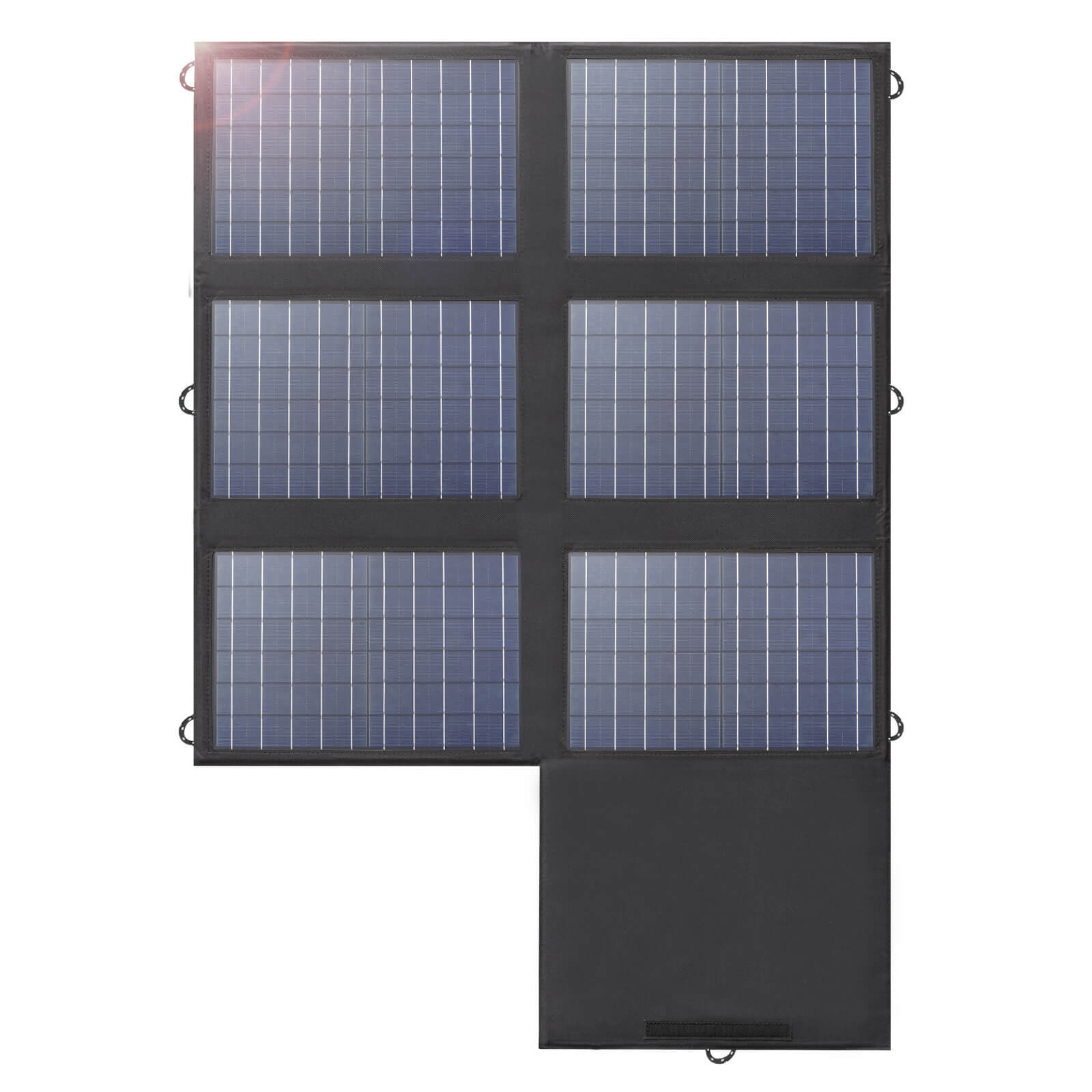
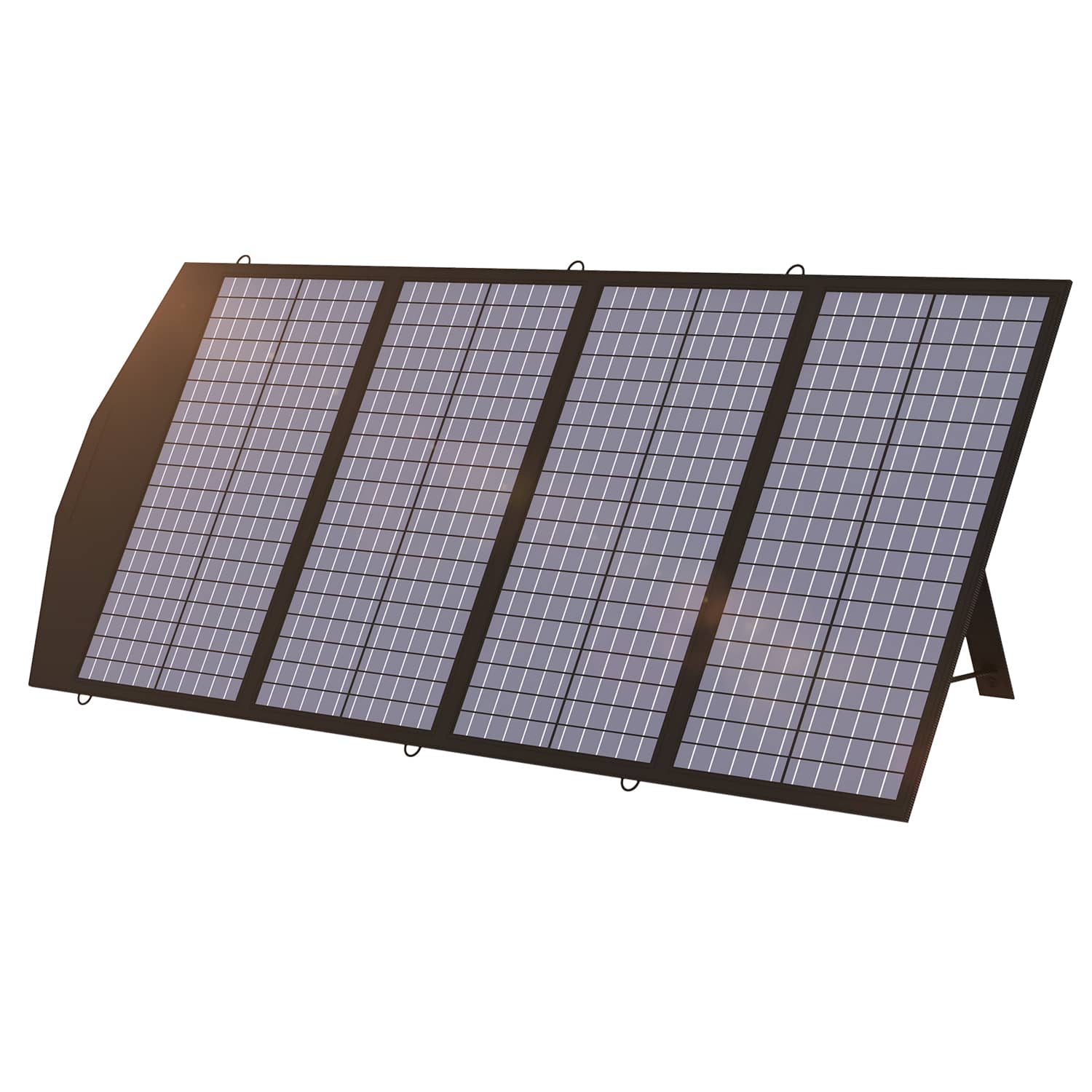
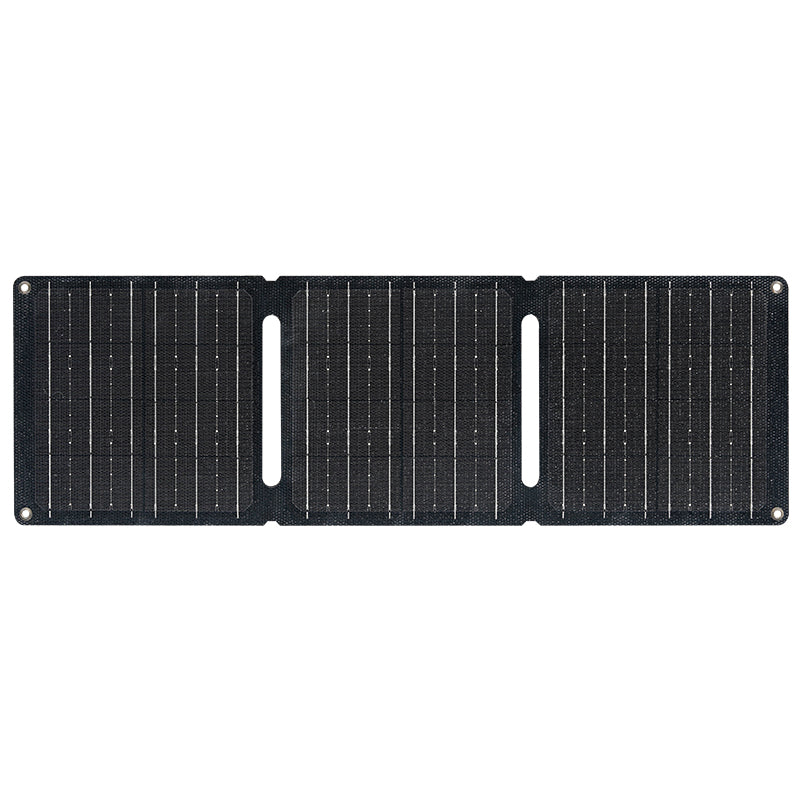
Most portable power stations support solar charging, but require a solar panel with the correct interface (and voltage). (We recommend using panels of the same brand for optimal compatibility.)
Charging Time: Charging time depends on the panel's wattage (W) and sunlight conditions.
Estimated formula: Charging time (hours) ≈ power station capacity (Wh) / actual solar panel wattage (W).
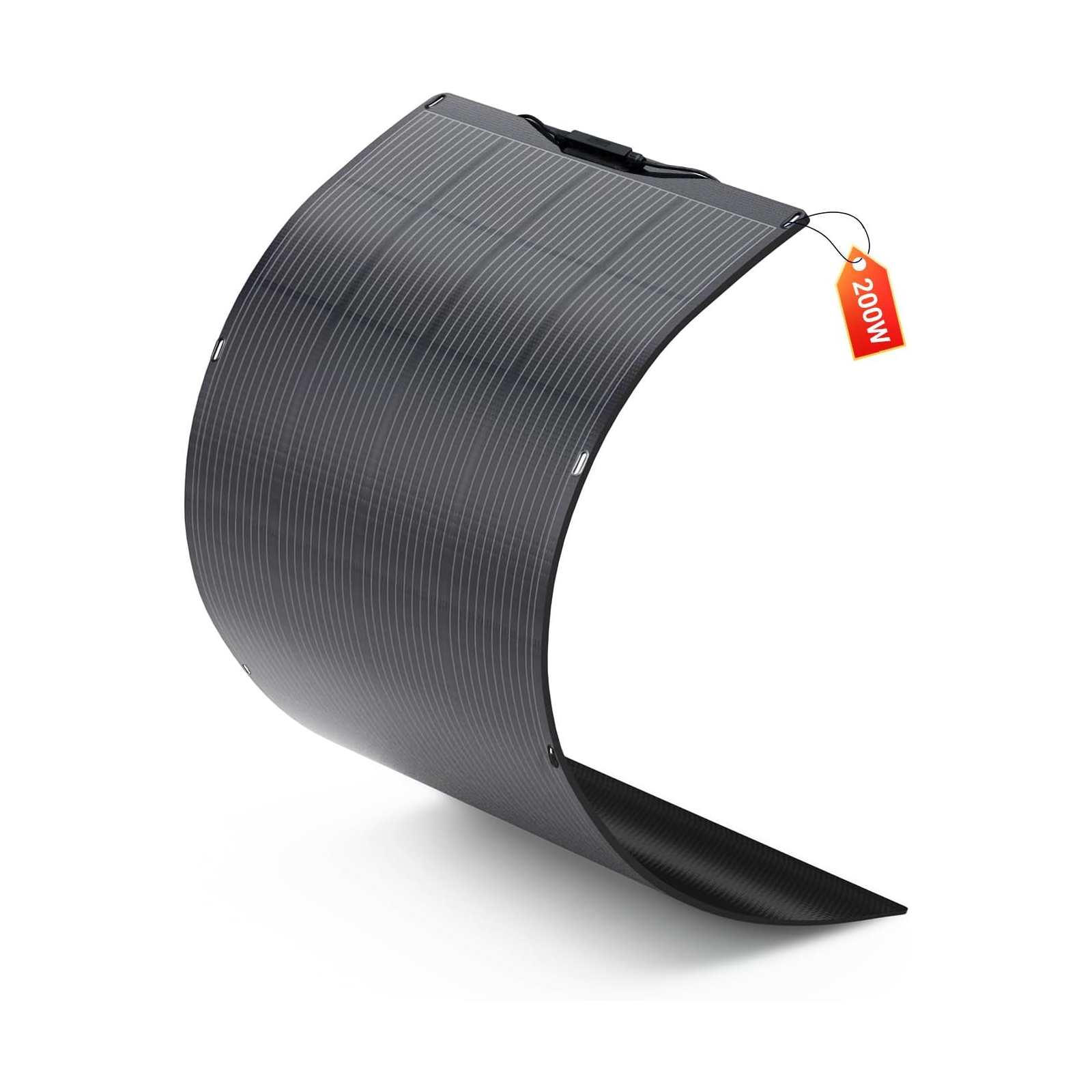
*For example: To charge a 1000Wh power station using a 200W solar panel, under ideal sunlight, the actual wattage might be approximately 180W. Charging time ≈ 1000 / 180 ≈ 5.5 hours. * Overcast conditions or poor lighting conditions will significantly extend charging time.
Contact Us
Do you have any question?
If you need pre-sales consultation and after-sales consultation under warranty, please contact only this email:service@allpowers.com